
Viruses can move through a household in different ways, depending on the type of virus and its primary route of transmission. While respiratory particles, direct contact, food, and bodily fluids can all play a role in some infections, household surfaces may also become involved when contaminated hands or materials come into contact with objects that are frequently shared. This does not mean that every surface in a home is a significant source of infection. In many situations, the importance of surface transmission varies considerably between different viruses. However, understanding which household surfaces receive frequent contact can help residents develop a more targeted and practical cleaning routine.
Many objects inside a home are touched repeatedly throughout the day. Door handles, faucets, light switches, remote controls, phones, tables, kitchen equipment, and bathroom fixtures are examples of high-contact surfaces. When a person is experiencing an infectious illness, these objects may receive additional attention because they are shared between household members. Rather than disinfecting every object continuously, it is more reasonable to identify the surfaces that are frequently touched and maintain them appropriately.
What Makes a Household Surface Important?
A surface becomes relevant to household hygiene for several reasons. The number of people touching it, how frequently it is touched, whether it can become contaminated, and how easily it can be cleaned all influence its importance.
For example, a door handle used by everyone in the household may receive far more contact than a decorative object that is rarely touched. Similarly, a kitchen counter used to prepare food has different hygiene considerations from a bookshelf.
The presence of a virus on a surface also does not automatically mean that infection will occur. Transmission depends on whether the virus remains infectious, how much contamination is present, and whether the virus subsequently reaches a suitable entry point such as the mouth, nose, eyes, or another route.
1. Door Handles
Door handles are among the most frequently touched surfaces in many homes. People may touch them when entering or leaving rooms, using the bathroom, accessing the kitchen, or moving between indoor and outdoor areas.
If contaminated hands touch a handle, microorganisms may potentially be transferred to the surface. Another person can then touch the same handle and continue the chain of contact.
For this reason, door handles can be included in a normal household cleaning routine. Additional attention may be appropriate when someone in the home is experiencing a contagious illness.
2. Bathroom Faucets
Faucets are frequently touched before and after handwashing. This creates an interesting situation because a person may touch the faucet with unclean hands before washing them and then touch the same faucet again after washing.
Bathroom faucets should therefore be included when cleaning shared bathroom surfaces. The surrounding sink area should also be maintained because it is regularly exposed to water and human contact.
Cleaning frequency can be adjusted depending on household circumstances. A home with many residents may require more frequent attention than a household with only one or two people.
3. Toilet Handles and Flush Buttons
Toilet handles and flush buttons are another category of high-contact surfaces. They are used regularly but may receive less cleaning attention than the toilet bowl itself.
Their importance is primarily related to frequent contact. If someone is sick, household members may choose to clean these surfaces more regularly as part of an overall hygiene routine.
The goal is not to assume that every toilet handle is highly contaminated. Instead, it is to recognize that frequently touched surfaces deserve reasonable attention.
4. Light Switches
Light switches are often ignored during household cleaning because they rarely appear dirty. Nevertheless, almost everyone touches them repeatedly.
A light switch may be used by several people throughout the day, creating opportunities for microorganisms to move between hands and surfaces.
Cleaning light switches should be done carefully because electrical components should not be exposed to excessive moisture. A suitable cleaning method should be used based on the manufacturer’s recommendations and the material of the switch.
5. Remote Controls
Remote controls are commonly shared among household members and may remain in use for long periods without being cleaned.
They can collect fingerprints, skin oils, dust, food residue, and microorganisms. Their frequent handling makes them worth including in a periodic cleaning routine.
However, remote controls are electronic devices, so they should not be sprayed directly with liquid. Cleaning should be performed carefully to avoid damaging the device.
6. Mobile Phones
Mobile phones are different from many household surfaces because they frequently travel between different environments. A phone may be handled at home, outside, during meals, and in other locations.
Because people also frequently touch their faces while using phones, maintaining the device appropriately can support general hygiene. However, the risk associated with a particular virus depends on its transmission characteristics.
Phones should be cleaned according to manufacturer guidance. Excessive liquid or inappropriate chemicals can damage the screen or other components.
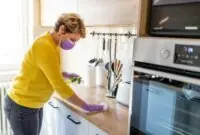
7. Kitchen Countertops
Kitchen countertops deserve special attention because they are used for food preparation and may come into contact with hands, packaging, utensils, and food.
If a person who is sick handles food or touches the countertop, contamination may potentially occur. However, the significance of this route depends on the specific virus.
Regular cleaning of food preparation surfaces remains an important household practice regardless of the particular infection. Spills and food residues should be removed promptly rather than being left on the surface.
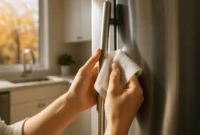
8. Refrigerator Handles
Refrigerator handles are frequently touched, often by people preparing or storing food. A person may open the refrigerator after handling raw ingredients or other objects.
This makes the handle an example of a high-contact surface. It can be cleaned periodically and given additional attention when a household member is sick.
The inside of the refrigerator should also be maintained. Food spills and damaged containers should be cleaned appropriately to prevent general contamination and unpleasant odors.
9. Kitchen Cabinet Handles
Cabinet handles may receive less attention than countertops even though they are touched frequently. People open cabinets before and during food preparation, often while their hands are occupied with ingredients.
This creates opportunities for microorganisms to move between hands and handles.
Cabinet handles can be cleaned as part of routine kitchen maintenance. The appropriate cleaning method depends on the material because excessive moisture or unsuitable chemicals can damage some finishes.
10. Dining Tables
Dining tables are shared surfaces that may come into contact with food, hands, utensils, and personal objects.
Cleaning the table before and after meals can help maintain general household hygiene. When someone is sick, household members may also consider avoiding unnecessary sharing of food and eating utensils.
The important point is that a dining table should be treated as a food-contact environment rather than simply as furniture.
11. Kitchen Utensils
Knives, cutting boards, plates, glasses, and other utensils can become contaminated through food and hand contact. This makes proper washing particularly important.
When someone in the household is sick, sharing personal eating and drinking items may be avoided when appropriate, depending on the nature of the illness.
Utensils should be washed using an appropriate method for the material and intended use. Simply rinsing an item may not provide the same level of cleaning as a proper washing process.
12. Sink Areas
Kitchen and bathroom sinks are frequently exposed to water, hands, food residues, and other materials.
Although sink surfaces are not automatically a major route of viral transmission, they are common household contact points and can be included in routine cleaning.
Keeping sinks clean and dry when possible can also reduce general buildup and make the area easier to maintain.
13. Computer Keyboards and Mice
Keyboards and computer mice are frequently touched, particularly in homes where people work or study remotely. They may be handled while eating or after touching other objects.
Because electronic equipment cannot simply be washed like ordinary surfaces, cleaning should be done carefully. Manufacturers often provide specific recommendations for cleaning these devices.
Regular maintenance can remove dirt and reduce the accumulation of material on high-contact surfaces without exposing the equipment to unnecessary moisture.
14. Tablets and Touchscreens
Tablets and other touchscreen devices are also handled frequently. In households with children, a single device may be shared by several people.
Touchscreens can accumulate fingerprints, dust, and other material during normal use. Appropriate cleaning can help maintain the device while supporting general hygiene.
As with mobile phones, the manufacturer’s cleaning instructions should be followed because certain cleaning agents can damage protective coatings or other components.
15. Furniture and Armrests
Furniture such as sofas and chairs can receive frequent contact, especially in shared living rooms. However, their importance depends on the type of material and the route through which a particular virus spreads.
Hard surfaces such as armrests may be easier to clean than fabrics. Fabric furniture should be maintained according to the manufacturer’s recommendations rather than repeatedly treated with unsuitable disinfectants.
When someone is sick, unnecessary close contact and prolonged shared use of personal spaces may be more relevant than attempting to disinfect every piece of furniture.
16. Bedside Tables
Bedside tables can become contaminated through frequent contact with phones, tissues, glasses, medication packaging, and other personal items.
If someone is ill, these surfaces may receive additional attention because the person may spend a significant amount of time near the area.
Regular cleaning can remove dust and residues, while frequently touched objects placed on the table should also be maintained appropriately.
17. Towel Racks and Bathroom Accessories
Bathroom accessories can receive repeated contact and may remain in a humid environment. Towel racks, handles, shelves, and other fixtures can therefore be included in normal bathroom maintenance.
The main concern is not simply the existence of a virus on a surface but whether contamination can move between people through repeated contact.
Maintaining clean and dry bathroom conditions can support general hygiene and reduce unnecessary accumulation of contaminants.
18. Laundry Baskets
Laundry baskets can come into contact with used clothing, towels, and other household fabrics. Their significance depends on whether the materials placed inside are contaminated with infectious material.
When someone is sick, heavily soiled laundry should be handled appropriately and according to relevant guidance for the specific illness.
Laundry baskets themselves can be cleaned periodically, especially if they are made from materials that can accumulate dirt or moisture.
19. Waste Bin Lids
Waste bin lids and handles can receive repeated contact, particularly in kitchens and bathrooms.
People may touch these surfaces after handling food waste, used tissues, or other discarded materials. For this reason, waste management should be combined with hand hygiene.
Bins should be emptied regularly and cleaned when necessary. Household members should wash their hands after handling waste and before preparing food.
20. Pet-Related Surfaces
Pet food bowls, handles, cages, and other animal-related objects can also be touched frequently. Their relevance to viral transmission depends strongly on the particular virus.
Pets and humans can be affected by different infectious organisms, so homeowners should avoid assuming that every human virus spreads through pets or household animal surfaces.
Normal pet hygiene remains useful. Feeding areas should be cleaned appropriately, animal waste should be handled carefully, and hands should be washed after contact with waste.
Why Surface Cleaning Should Be Targeted
It is easy to become overly focused on surfaces when thinking about viruses. However, surface transmission is not equally important for every virus.
Some viruses primarily spread through respiratory particles, while others have different transmission pathways. Therefore, repeatedly disinfecting surfaces may provide limited benefit if the primary route of transmission is actually close respiratory contact.
This is why cleaning should be combined with other preventive measures. Depending on the infection, ventilation, hand hygiene, reducing close contact, safe food handling, or avoiding shared personal items may be more important.
Cleaning High-Touch Surfaces
A practical cleaning routine should prioritize surfaces based on frequency of contact and the circumstances of the household.
When nobody is sick, routine cleaning is generally sufficient for ordinary household maintenance. When someone has a contagious illness, frequently touched surfaces can receive additional attention.
Cleaning products should always be used according to their instructions. Disinfectants should not be mixed with other chemicals unless the product instructions specifically allow it.
Cleaning vs. Disinfection
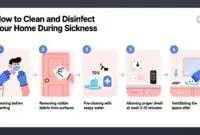
Cleaning and disinfection are related but different processes. Cleaning generally removes dirt, residues, and contaminants from surfaces. Disinfection uses a suitable product to reduce microorganisms.
Not every household surface needs to be disinfected continuously. In many situations, regular cleaning is sufficient.
Disinfection becomes more relevant when there is a specific reason, such as a known contamination event or an infectious illness for which surface disinfection is recommended.
Do Not Forget Hand Hygiene
Surface cleaning cannot replace hand hygiene. A clean door handle can become contaminated again if someone touches it with contaminated hands.
This is why surface management and handwashing should be considered together. Household members should wash their hands at appropriate times, particularly before eating, before preparing food, after using the bathroom, and after caring for someone who is sick.
This combined approach is more practical than attempting to keep every surface continuously disinfected.
When Someone in the Home Is Sick
When a household member has a contagious illness, the cleaning routine may need to change temporarily. High-contact surfaces can receive additional attention, and personal items may be separated where appropriate.
Ventilation may also become more important if the illness spreads primarily through respiratory particles.
The exact precautions should depend on the specific illness. There is no universal cleaning routine that is equally effective for every virus.
Avoid Excessive Disinfection
Excessive use of disinfectants can create unnecessary exposure and may damage household materials. It can also create a false sense of security if more important transmission routes are being ignored.
For example, repeatedly disinfecting a table does not compensate for spending extended periods in close contact with a person who has a respiratory infection in a poorly ventilated room.
The most effective approach is to identify the actual route of transmission and prioritize measures accordingly.
Creating a Practical Surface-Cleaning Routine
A reasonable household routine can divide surfaces into several categories. High-contact surfaces can be cleaned regularly, food preparation areas can be cleaned after use, and bathroom surfaces can be maintained as part of normal cleaning.
During illness, the frequency can be increased based on the circumstances.
This approach is more realistic than attempting to disinfect every object in the house every day. A sustainable routine is more likely to be followed consistently.
Conclusion
Household surfaces can become part of the transmission process for some viruses, particularly when contaminated hands or materials come into contact with objects that are shared by several people. However, the importance of surface transmission differs between viruses, so not every surface should be treated as an equal risk.
Door handles, faucets, toilet controls, light switches, remote controls, phones, kitchen countertops, refrigerator handles, keyboards, and other high-contact objects can be included in a practical cleaning routine.
The most important point is that surface cleaning should not be considered a replacement for other preventive measures. Hand hygiene, ventilation, respiratory etiquette, appropriate food handling, and reducing unnecessary close contact may be more important depending on how a particular virus spreads.
A sensible household hygiene strategy therefore focuses on the actual transmission route rather than simply cleaning everything. By identifying high-contact surfaces and combining targeted cleaning with appropriate personal hygiene, homeowners can maintain a cleaner environment without turning daily life into an unnecessary cycle of constant disinfection.

Dianna Bearden is a homeowner and DIY enthusiast who loves tackling household pests. She shares budget-friendly tips and proven tricks to reclaim your space from bugs.