Bacteria are naturally present in the environment and can be found in almost every household. Their presence does not automatically indicate that a home is dirty or poorly maintained. In fact, many types of bacteria exist naturally on human skin, food, soil, water, and household surfaces. The main concern is not the complete elimination of bacteria, which is unrealistic, but the management of areas where certain microorganisms can survive or multiply under favorable conditions. Moisture, food residue, organic material, and frequent human contact can create environments where bacteria are more likely to remain.

For this reason, understanding where bacteria commonly grow in a home can help homeowners develop a more effective cleaning routine. Some areas receive frequent attention, while others are often overlooked even though they may remain damp or come into contact with food and human hands. By identifying these locations, cleaning efforts can become more targeted and practical instead of relying on excessive cleaning throughout the entire house.
1. Kitchen Sink
The kitchen sink is one of the areas that deserves regular attention because it is frequently exposed to water, food particles, and household waste. During food preparation and dishwashing, organic materials can accumulate around the sink, drain, and surrounding surfaces.
Moisture is another important factor. A surface that remains wet for long periods can provide more favorable conditions for certain microorganisms than a completely dry surface. Food particles left around the drain or sink can also provide nutrients that support microbial growth.
For this reason, the sink should not only be rinsed with water. Regular cleaning should include the surrounding surfaces, drain area, and places where food residue may accumulate. Leaks should also be repaired because persistent moisture can create additional hygiene problems.
2. Kitchen Sponges
Kitchen sponges are frequently used to clean dishes, countertops, and other surfaces. However, the same characteristic that makes them useful for cleaning can also make them difficult to maintain hygienically. Sponges can retain water and small food particles, creating a moist environment where microorganisms may remain.
Using the same sponge for an extended period can therefore reduce the effectiveness of cleaning. Instead of removing contamination, an old and poorly maintained sponge may potentially transfer microorganisms between surfaces.
Homeowners should pay attention to the condition of cleaning sponges and replace them when necessary. Cleaning tools should also be used appropriately rather than assuming that a sponge remains hygienic simply because it is regularly exposed to soap or water.
3. Cutting Boards
Cutting boards can become contaminated during food preparation, particularly when they are used for raw ingredients. Small cuts and scratches on the surface can make them more difficult to clean thoroughly.
Using one cutting board for raw meat and ready-to-eat foods without appropriate cleaning can also create opportunities for cross-contamination. This is why food preparation practices should consider both the type of food and the condition of the equipment.
A cutting board should be cleaned appropriately after use, particularly when it has been in contact with raw animal products. Homeowners should also consider replacing boards that have become heavily damaged or difficult to clean.
4. Refrigerator Handles and Shelves
The refrigerator is often viewed as a clean area because it is used for food storage. However, refrigerator handles are frequently touched, sometimes immediately after handling food or other household objects.
The shelves and internal surfaces can also become contaminated through spills, leaking food containers, or improperly stored ingredients. If these spills remain for long periods, they can contribute to unpleasant odors and microbial contamination.
Regularly cleaning refrigerator handles and internal surfaces is therefore a practical part of household hygiene. Food should also be stored in suitable containers to reduce the possibility of spills and cross-contamination.
5. Bathroom Sink
Bathroom sinks are another area where moisture is consistently present. People use them for washing hands, brushing their teeth, shaving, and other personal activities.
Because the sink is frequently touched and regularly exposed to water, it can accumulate microorganisms and organic residues over time. Faucets and handles deserve particular attention because they are touched repeatedly.
Regular cleaning and drying can help maintain the area. Good ventilation is also useful because reducing persistent moisture can make the bathroom environment easier to maintain.
6. Toilet Handles and Flush Controls
Toilet handles, buttons, and flush controls are frequently touched but may not always receive the same cleaning attention as the toilet bowl itself. This makes them an important part of the bathroom cleaning routine.
The issue is not that toilet handles are automatically dangerous. Rather, they are high-contact surfaces that can accumulate microorganisms through repeated use.
Cleaning these surfaces regularly can therefore be a reasonable preventive measure, especially in households where several people share the same bathroom.
7. Bathroom Towels
Towels are designed to absorb water, which means they can remain damp after use. If a towel does not dry properly between uses, it may provide a suitable environment for microorganisms to remain.
This does not mean that every damp towel is a serious health hazard. However, towels should be allowed to dry properly and should be washed regularly according to their use.
Bathroom ventilation can also help towels dry faster. A poorly ventilated bathroom may keep fabrics damp for longer periods, making regular washing and drying even more important.
8. Shower Areas
Shower walls, floors, curtains, and other bathroom surfaces are repeatedly exposed to water. Soap residues, body oils, and other materials can accumulate on these surfaces.
Regular cleaning can help prevent buildup and maintain a more hygienic environment. Areas that remain continuously wet should receive particular attention because persistent moisture can support various forms of microbial growth.
Improving ventilation and allowing surfaces to dry can complement routine cleaning. This approach addresses both the visible buildup and the environmental conditions that support it.
9. Door Handles
Door handles are among the most frequently touched objects in a household. They are used when entering and leaving rooms, and people may touch them before washing their hands.
Because many different people can use the same handle, it can function as a point where microorganisms are transferred between hands and surfaces. The same principle applies to cabinet handles, drawer pulls, and other frequently touched objects.
Regular cleaning of high-contact surfaces can therefore be useful, particularly in shared areas. However, there is no need to disinfect every handle continuously under ordinary household conditions.
10. Light Switches
Light switches are often overlooked during cleaning because they do not appear visibly dirty. Nevertheless, they are touched frequently and can accumulate microorganisms over time.
The risk associated with a light switch depends on the surrounding circumstances, the number of people using it, and how often it is touched. In normal household maintenance, occasional cleaning can help keep these surfaces in good condition.
The important principle is to include high-contact objects in the cleaning routine rather than focusing exclusively on visibly dirty surfaces.
11. Remote Controls
Remote controls are handled frequently but are not always included in household cleaning routines. They can collect skin oils, dust, food residue, and microorganisms through repeated contact.
Because electronic devices should not be treated like ordinary washable surfaces, cleaning should be performed carefully according to the manufacturer’s recommendations. Excessive liquid should be avoided because it can damage the device.
Regular attention to frequently handled electronics can improve overall household cleanliness without requiring complicated procedures.
12. Mobile Phones
Mobile phones travel between different environments throughout the day. They may be placed on tables, carried in pockets, handled while eating, and used in many different locations.
This makes the phone another surface that can accumulate microorganisms. However, cleaning electronic devices requires care because excessive moisture or unsuitable cleaning products can damage them.
The appropriate cleaning method depends on the device manufacturer’s recommendations. The broader lesson is that objects that move between different environments deserve consideration in a household hygiene routine.
13. Kitchen Countertops
Countertops are commonly used for preparing food, placing groceries, storing kitchen equipment, and performing other activities. Because of this, they can come into contact with both food and household objects.
If raw food is prepared on the same surface used for ready-to-eat food, cross-contamination can occur when the surface is not cleaned appropriately between activities.
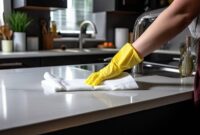
Countertops should therefore be cleaned after food preparation, particularly when raw ingredients have been involved. Food spills should also be removed promptly rather than being allowed to remain on the surface.
14. Dishcloths and Cleaning Cloths
Like kitchen sponges, dishcloths and cleaning cloths can become contaminated because they repeatedly contact moisture and household surfaces.
Using one cloth for multiple areas can potentially transfer microorganisms from one location to another. For example, a cloth used for cleaning a bathroom should not subsequently be used to clean kitchen surfaces.
Separating cleaning materials by area is a simple organizational practice that can reduce cross-contamination. Cloths should also be washed and dried appropriately.
15. Pet Food and Water Bowls
Pet bowls are frequently exposed to food, saliva, and moisture. If they are not cleaned regularly, residues can accumulate and create an environment where microorganisms can remain.
The appropriate cleaning routine depends on the type of pet and its feeding habits. However, food and water containers should not be treated as objects that never require cleaning.
Maintaining pet feeding areas is part of general household hygiene and can also help prevent unpleasant odors and residue buildup.
16. Garbage Bins
Garbage bins can contain food residues, packaging, and other organic materials. These materials can support microorganisms and may also attract insects.
The kitchen garbage bin deserves particular attention because food waste can accumulate quickly. Regular disposal of waste and periodic cleaning of the bin can help maintain the surrounding environment.
Hands should also be washed after handling garbage, particularly before preparing food or touching clean kitchen equipment.
17. Washing Machine
Washing machines are designed to clean clothing, but the machine itself can also accumulate moisture, detergent residues, and organic material. Rubber seals, detergent compartments, and areas that remain damp may require occasional cleaning.
Leaving the washing machine closed immediately after a cycle can also prevent the interior from drying properly. Allowing suitable ventilation after use can help reduce persistent moisture.
The machine should be maintained according to the manufacturer’s instructions because cleaning requirements vary between models.
18. Air Conditioning and Ventilation Areas
Air conditioning systems and ventilation equipment can accumulate dust and moisture if they are not maintained properly. The concern is not simply the presence of bacteria in the air but the overall condition of the equipment and surrounding environment.
Filters and components should be maintained according to manufacturer recommendations. Poor maintenance can affect indoor air quality and may contribute to unpleasant odors or other environmental problems.
Regular maintenance is therefore more useful than relying on surface cleaning alone.
19. Damp Areas Under Furniture
Areas underneath cabinets, sinks, refrigerators, and other furniture can sometimes be overlooked during routine cleaning. If these areas experience leaks or condensation, moisture can remain unnoticed for extended periods.
Because these spaces are less visible, problems may only become apparent after an odor or visible growth develops.
Homeowners should occasionally inspect difficult-to-reach areas, particularly around plumbing fixtures and appliances that produce or use water.
20. Why Moisture Is an Important Factor
Across many of the areas discussed above, one factor appears repeatedly: moisture. Bacteria do not all behave in the same way, and not every damp surface will support harmful bacterial growth. However, controlling unnecessary moisture is an important part of maintaining household hygiene.
Leaks should be repaired, wet materials should be dried, and bathrooms should have adequate ventilation. Kitchen sponges, towels, and cleaning cloths should also be allowed to dry properly.
Moisture management is useful because it addresses one of the environmental conditions that can influence microbial survival.
Should Every Surface Be Disinfected?
The answer is generally no. Attempting to disinfect every surface continuously is neither practical nor necessary for ordinary household maintenance.
Routine cleaning is often sufficient for many surfaces. Disinfection may become more relevant when there is a known contamination event or when someone in the household is experiencing certain infectious illnesses.
The important distinction is that cleaning and disinfection are not identical processes. Cleaning removes dirt and contaminants, while appropriate disinfection is intended to reduce microorganisms on surfaces.
Using disinfectants correctly is more important than using them excessively.
Building a Practical Cleaning Routine
A practical household cleaning routine should prioritize areas according to how they are used. Kitchens and bathrooms generally require more frequent attention than areas that are rarely touched.
High-contact surfaces such as door handles, switches, faucets, and remote controls can also be included in regular cleaning. Food preparation areas should receive particular attention because of the potential for cross-contamination.
The routine should remain realistic. A cleaning schedule that is too complicated is unlikely to be maintained consistently.
Conclusion
Bacteria can be found in many locations throughout a home, but their presence alone does not mean that the environment is unsafe. The more useful approach is to understand which areas provide conditions where microorganisms can remain and which surfaces are frequently exposed to food, moisture, or human contact.
Kitchen sinks, sponges, cutting boards, refrigerator handles, bathroom fixtures, towels, door handles, cleaning cloths, pet bowls, and garbage bins are among the areas that deserve regular attention.
Moisture management is particularly important because damp environments can make household hygiene more difficult. Repairing leaks, improving ventilation, drying wet materials, and maintaining cleaning equipment can therefore complement normal cleaning practices.
Homeowners do not need to create a completely sterile environment. Instead, a consistent and targeted cleaning routine can reduce unnecessary contamination while keeping household maintenance practical. By focusing on areas with greater potential for contamination and maintaining them appropriately, residents can create a cleaner and more manageable home environment.

Dianna Bearden is a homeowner and DIY enthusiast who loves tackling household pests. She shares budget-friendly tips and proven tricks to reclaim your space from bugs.