Bed bugs are one of the most frustrating pests that can enter a home. They are small, difficult to detect, and capable of hiding in places where most people would never think to look. Unlike some household pests, bed bugs are not attracted to food left on the table or dirty dishes in the kitchen. Instead, they feed primarily on human blood, usually when people are resting or sleeping.
Because bed bugs are so small and good at hiding, an infestation can grow before the homeowner realizes there is a problem. Many people first notice itchy bites, small blood spots on their sheets, or tiny dark marks around their mattress. However, these signs can sometimes be confused with other problems, which makes proper identification important.
The good news is that bed bug infestations can be controlled. However, getting rid of them usually requires patience, careful cleaning, and sometimes professional pest control treatment. Understanding where bed bugs come from, how to recognize them, and how to prevent them from spreading can help you deal with the problem more effectively.
What Are Bed Bugs?
Bed bugs are small insects that feed on the blood of humans and animals. The most common species found in homes is known as Cimex lectularius. Adult bed bugs are usually reddish-brown, flat, and oval-shaped. They are approximately the size of an apple seed when fully grown.
One reason bed bugs are difficult to control is their ability to hide in extremely small spaces. During the day, they may hide inside mattress seams, cracks in bed frames, furniture joints, electrical outlets, baseboards, and even behind wallpaper. They usually come out at night when people are sleeping and less likely to notice them.
Bed bugs do not fly or jump. Instead, they crawl from one location to another. Despite this limitation, they can spread surprisingly easily because they often travel by hiding inside luggage, clothing, furniture, bags, and other personal belongings.
It is also important to understand that having bed bugs does not mean a home is dirty. Bed bugs can live in clean homes, expensive hotels, apartments, and many other environments. Their main goal is to find a place where they can access a blood meal and hide safely afterward.
How Do Bed Bugs Get Into Your Home?
Bed bugs usually enter homes by hitchhiking on personal belongings. Travel is one of the most common ways people accidentally bring bed bugs home. A bed bug can hide inside a suitcase or clothing while someone is staying in a hotel, hostel, apartment, or another location with an infestation.
Used furniture is another common source. Mattresses, sofas, chairs, and other second-hand furniture can contain hidden bed bugs or eggs. Even if the furniture looks clean, insects may be hiding inside cracks and fabric seams.
Bed bugs can also spread between apartments or closely connected homes. In apartment buildings, they may move through walls, pipes, electrical openings, or shared areas. This is one reason why controlling bed bugs in multi-unit buildings can be more complicated than treating a single house.
Visitors can also accidentally transport bed bugs. A person may unknowingly carry one inside a bag, jacket, or other belongings after visiting an infested location. While this does not mean people should be afraid of visitors, it shows why early detection is important.
Suggested Image for This Section: A travel suitcase placed on a hotel bed or luggage rack, illustrating how bed bugs can hitchhike on personal belongings.
Signs That You May Have Bed Bugs
Bed bug bites are often the first sign that people notice, but bites alone are not enough to confirm an infestation. Different insects and skin conditions can cause similar marks. Some people also do not react strongly to bed bug bites, which means an infestation can exist without obvious skin symptoms.
Common signs of bed bugs include:
- Small, itchy, red bites that may appear after sleeping.
- Tiny blood spots on sheets or pillowcases.
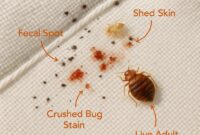
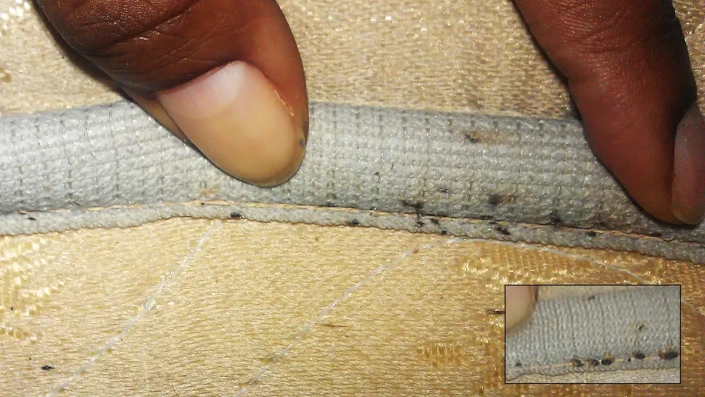
- Dark brown or black spots on mattresses, furniture, or walls.
- Shed skins from growing bed bugs.
- Small, pale eggs or eggshells in hidden areas.
- Live bed bugs hiding near the bed or furniture.
Bed bug bites often appear on areas of skin exposed during sleep, such as the arms, neck, face, and legs. However, the appearance of bites can vary significantly from person to person. Some people develop noticeable itchy bumps, while others may have little or no reaction.
The most reliable way to confirm bed bugs is by finding physical evidence. Carefully inspect the seams and edges of your mattress, the headboard, bed frame, and nearby furniture. Using a flashlight can make it easier to see small insects and dark spots hidden in narrow areas.
Where Do Bed Bugs Usually Hide?
Although their name suggests that bed bugs only live in beds, they can hide in many locations throughout a room. They often stay close to where people sleep because this gives them easier access to a food source.
The mattress is one of the first places to inspect. Look closely at seams, labels, folds, and corners. Bed bugs may also hide inside the box spring, especially around the edges and underneath the fabric.
Bed frames and headboards are also common hiding places. Wooden furniture with cracks and joints can provide excellent shelter. In some cases, bed bugs may hide behind picture frames, inside bedside tables, underneath loose wallpaper, or along baseboards.
As an infestation becomes larger, bed bugs may spread farther away from the bed. They can move into sofas, chairs, closets, curtains, and other furniture. This is why treating only the mattress may not solve the entire problem.
Suggested Image for This Section: An inspection image showing mattress seams, a bed frame, and nearby furniture as common bed bug hiding places.
Why Bed Bugs Are Difficult to Get Rid Of
Bed bugs are difficult to eliminate because they are experts at hiding. Their flat bodies allow them to fit inside narrow cracks where sprays and cleaning tools may not easily reach.
Another challenge is their reproductive ability. Female bed bugs can lay multiple eggs over time, allowing an infestation to continue growing if treatment does not eliminate both adult insects and developing eggs.
Bed bug eggs can also make treatment more complicated. Some control methods may kill active bed bugs but fail to destroy every egg. When the eggs hatch, the infestation can begin again. This is why follow-up inspections and treatments are often necessary.
Bed bugs can also survive for long periods without feeding. This means simply leaving a room empty for a short time may not eliminate the problem. Waiting for bed bugs to disappear naturally is usually not an effective solution.
Many people make the mistake of using random insect sprays and assuming the problem will immediately disappear. In reality, poorly planned treatment can cause bed bugs to move into other rooms and make the infestation harder to control.
How to Get Rid of Bed Bugs
Getting rid of bed bugs requires a systematic approach. The goal is to locate the infestation, remove as many insects as possible, treat hiding areas, and prevent surviving bed bugs from spreading.
Wash and Dry Bedding at High Heat
Start by removing sheets, blankets, pillowcases, and other washable bedding. Place the items directly into sealed bags before moving them through the home. This helps prevent bed bugs from falling off and spreading to other rooms.
Wash the items according to the highest temperature recommended for the fabric. After washing, use a high-heat dryer when the material allows it. Heat is an important part of bed bug control because bed bugs and their eggs are sensitive to sufficiently high temperatures.
After cleaning, store treated items in clean bags or containers until the infestation has been controlled.
Vacuum Carefully
Vacuuming can help remove visible bed bugs, eggs, and shed skins from mattresses, bed frames, carpets, and furniture. Pay special attention to seams, cracks, corners, and other narrow spaces.
After vacuuming, immediately seal and dispose of the vacuum contents properly. If the vacuum has a reusable container, clean it carefully outside the living area. Leaving collected insects inside the vacuum can allow them to escape later.
Vacuuming alone will not eliminate a serious infestation, but it can reduce the number of bed bugs and support other treatment methods.
Reduce Clutter
Clutter creates additional hiding places for bed bugs. Clothing piles, stacks of paper, boxes, and unnecessary items make inspections more difficult and give the insects more places to hide.
Removing clutter does not mean moving everything into another room. Doing that could accidentally spread the infestation. Instead, carefully sort items and place potentially infested belongings into sealed bags or containers until they can be cleaned or treated.
A cleaner and more organized room makes it easier to identify where bed bugs are hiding and monitor whether treatment is working.
Use Mattress and Box Spring Encasements
Special bed bug-proof encasements can be used to cover mattresses and box springs. These covers trap bed bugs that may already be inside and prevent additional insects from hiding within the mattress.
The encasement should remain in place for an extended period because bed bugs can survive without feeding for a long time. Make sure the cover is specifically designed for bed bug protection and does not have openings that insects can easily escape through.
Suggested Image for This Section: A person placing a protective bed bug encasement over a mattress.
Should You Throw Away Your Mattress?
Many people immediately assume they need to throw away an infested mattress. In some cases, this may be necessary, but it is not always the best solution.
Discarding furniture without proper preparation can actually spread bed bugs. If an infested mattress is moved through hallways or shared spaces without being sealed or wrapped, insects may fall off and create new infestations.
A mattress may sometimes be treated and protected with a bed bug-proof encasement. Before throwing away expensive furniture, it may be worth consulting a pest control professional.
If furniture must be discarded, it should be clearly marked or damaged so that someone else does not take it home and accidentally spread the infestation.
When Should You Call a Professional Pest Control Company?
Small and early infestations may sometimes be managed with careful cleaning and targeted treatment. However, professional assistance is often necessary when bed bugs have spread to multiple rooms or when repeated home treatments have failed.
Pest control professionals have access to specialized equipment and treatment methods that may not be available to homeowners. Depending on the situation, they may use targeted insecticides, heat treatment, steam treatment, or a combination of methods.
Professional treatment is particularly important in apartment buildings because bed bugs can move between units. Treating only one apartment without addressing nearby infestations may allow the problem to return.
Before choosing a pest control company, ask about their experience with bed bugs and how many follow-up visits may be required. Bed bug control is often a process rather than a single treatment.
How to Prevent Bed Bugs From Returning
Preventing bed bugs requires awareness, especially after traveling or bringing used items into your home.
When staying in a hotel, avoid placing luggage directly on the bed or floor near the bed. Inspect the mattress seams and headboard for obvious signs of bed bugs. Using a luggage rack and keeping your suitcase away from sleeping areas can reduce the risk of bringing insects home.
After returning from a trip, inspect your luggage before bringing it into bedrooms. Wash clothing when possible and use appropriate heat settings in the dryer.
Be careful when purchasing used furniture. Inspect seams, cracks, cushions, and hidden areas before bringing items into your home. Never assume that furniture is safe simply because it looks clean.
Regularly checking bedrooms can also help identify problems early. The sooner a bed bug infestation is discovered, the easier it is usually to control.
Common Mistakes People Make When Dealing With Bed Bugs
One of the biggest mistakes is ignoring the problem and hoping the bed bugs will disappear. Bed bugs do not usually go away on their own, and an untreated infestation can grow over time.
Another mistake is moving to another room to sleep without treating the infestation. When people start sleeping in a different room, bed bugs may follow the available food source and spread into new areas of the home.
Using excessive amounts of insecticide is also a dangerous and ineffective approach. More chemicals do not automatically mean better results. Incorrect use can create health risks and may cause bed bugs to move into other hiding places.
Throwing away furniture without treating the surrounding area is another common mistake. Even if an infested mattress is removed, bed bugs may still be hiding in the bed frame, carpet, walls, or nearby furniture.
The most effective approach is to remain organized, inspect carefully, and follow a complete treatment plan.
Final Thoughts
Bed bugs are unpleasant and stressful, but they are a problem that can be managed with the right approach. The most important step is early identification. Pay attention to physical evidence such as dark spots, shed skins, eggs, and live insects rather than relying only on bite marks.
Once bed bugs are confirmed, avoid panic and avoid spreading potentially infested belongings throughout the home. Clean and treat items carefully, reduce clutter, inspect hiding places, and monitor the situation over time.
For larger or persistent infestations, professional pest control may be the most practical solution. Bed bugs are difficult to eliminate because of their ability to hide and survive, so a complete and consistent treatment strategy is far more effective than quick fixes.
By understanding how bed bugs spread and where they hide, you can take practical steps to protect your home. Regular inspections, careful travel habits, and early action can make a significant difference in preventing a small problem from becoming a major infestation.

Dianna Bearden is a homeowner and DIY enthusiast who loves tackling household pests. She shares budget-friendly tips and proven tricks to reclaim your space from bugs.