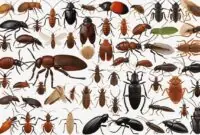

Managing insects inside a home is not simply a matter of killing every insect that appears. Insects are part of the natural environment, and many species perform useful ecological functions. The real concern begins when certain insects enter living spaces in large numbers, contaminate food, damage property, or create uncomfortable conditions for household members. For this reason, effective insect management should focus on identifying the cause of the problem and reducing the environmental conditions that allow unwanted insects to survive.
A practical approach combines prevention, monitoring, environmental maintenance, and targeted treatment when necessary. This concept is consistent with the general principle of integrated pest management, where chemical treatment is not automatically considered the first or only option. By combining several methods, homeowners can manage insects more systematically and avoid unnecessary reliance on pesticides.
Start by Identifying the Insect
Before choosing a treatment method, homeowners should first determine what type of insect is present. Different insects have different behaviors, feeding patterns, nesting locations, and environmental preferences. An approach that works for ants may not work for cockroaches, while termites require a different level of attention because they can affect structural materials.
Observation can provide useful information. Homeowners can consider the insect’s physical appearance, where it is found, whether it appears during the day or at night, and whether there are repeated signs in the same location. The surrounding conditions should also be considered because they may provide clues about what is attracting the insect.
Correct identification reduces the risk of applying an unsuitable treatment. It also helps homeowners determine whether the problem can reasonably be managed through household maintenance or whether professional assistance may be necessary.
Remove Food Sources
Food management is one of the most practical ways to reduce insect activity. Many household insects are attracted to food residue, sugary substances, organic waste, and improperly stored ingredients.
Food should be stored in closed containers whenever possible, while leftovers should be refrigerated or disposed of appropriately. Kitchen surfaces should also be cleaned after preparing meals. Crumbs and spilled liquids may seem insignificant, but repeated exposure can provide enough resources for insects to remain in an area.
Pet food should receive similar attention. If food is left exposed for long periods, it may become another source that attracts insects. Managing these resources can reduce the reasons insects have to remain inside the home.
Control Moisture
Moisture is an important factor in managing several types of insects. Bathrooms, kitchens, drains, basements, storage rooms, and areas affected by leaks can provide favorable conditions for certain species.
Homeowners should repair leaking pipes and faucets and improve ventilation where necessary. Standing water should also be removed from indoor and outdoor containers. After rainfall, outdoor areas should be checked for objects that may have collected water.
Moisture management is useful because it addresses the environmental conditions that support insects rather than simply removing the insects themselves.
Maintain Drains and Hidden Areas
Drains can become overlooked areas where insects may find moisture, food residue, and shelter. Regular cleaning and proper drainage can help reduce these conditions.
Hidden areas behind refrigerators, ovens, cabinets, and sinks should also be inspected periodically. These locations are often difficult to see during routine cleaning, allowing food residue and moisture to accumulate.
A complete insect management routine should therefore include areas that are not immediately visible. Problems often persist because the source is located somewhere that homeowners rarely inspect.
Use Physical Barriers
Physical exclusion can reduce insect entry without requiring chemical treatment. Window screens, properly fitted doors, seals, and repaired cracks can make it more difficult for insects to enter the house.
These measures are especially useful for flying insects and species that enter through small openings. However, barriers should be maintained because damaged screens or deteriorated seals may reduce their effectiveness.
The advantage of physical barriers is that they address access directly. Instead of repeatedly treating insects after they enter, homeowners can reduce the number of opportunities available to them.
Keep Outdoor Areas Under Control
The condition of the garden and surrounding environment can influence insect activity inside the house. Overgrown vegetation, standing water, piles of leaves, and accumulated materials may provide shelter or breeding conditions for some insects.
Outdoor maintenance should focus on reducing unnecessary accumulation rather than attempting to eliminate every insect. Many insects are beneficial and contribute to pollination or natural ecological processes.
Plants should therefore be maintained rather than removed unnecessarily. Materials such as unused containers, cardboard, and piles of organic waste should be organized or removed when they no longer serve a purpose.
Consider Natural Methods Carefully
Natural methods are sometimes promoted as alternatives to conventional insecticides. Certain plants, essential oils, traps, and physical barriers may provide supporting benefits in particular situations.
However, the word “natural” should not be interpreted as a guarantee of effectiveness or safety. Concentrated plant extracts and essential oils can still cause irritation or create risks for pets and children if used incorrectly.
Natural approaches are most useful when they form part of a broader prevention strategy. They should not be treated as a universal solution for established infestations.
Use Insecticides Responsibly
Chemical insecticides can be effective when used appropriately, particularly when an infestation cannot be managed through environmental measures alone. However, they should be treated as a targeted control method rather than a replacement for household maintenance.
Instructions on the product label should be followed carefully. Applying a larger quantity than recommended does not necessarily make the treatment more effective and may increase unnecessary exposure.
Chemical products should also be stored safely and kept away from children and pets. If the source of the infestation is unknown, using an insecticide without identifying the insect may lead to ineffective treatment.
Monitor the Results
After preventive or control measures have been applied, the situation should be monitored. The purpose of monitoring is to determine whether insect activity is decreasing or whether the underlying problem remains.
For example, if ants continue to appear in the same location after food residue has been removed, there may be an access point or nest nearby. If mosquitoes continue to appear, the source may be located outdoors rather than inside the house.
Monitoring therefore provides information that can guide the next step. It prevents homeowners from repeatedly applying the same method without determining whether it is actually working.
Avoid Treating Every Insect as a Pest
One important aspect of responsible insect management is understanding that not every insect should be eliminated. Bees, butterflies, ladybugs, and many other insects can provide important ecological benefits.
Eliminating beneficial insects unnecessarily can negatively affect the local environment. The objective should be to manage insects that are creating a specific household problem rather than attempting to create an environment where no insects exist.
This distinction can make pest management more balanced and environmentally responsible.
Know When Professional Help Is Needed
Household methods may be sufficient for minor insect problems, but professional assistance may be necessary when activity becomes persistent or extensive. Termites, established bed bug infestations, and large cockroach populations can be difficult to manage without a systematic inspection.
Professional pest control can help identify the source of the problem and determine which treatment is appropriate. This can be particularly valuable when insects are hiding inside walls, ceilings, furniture, or other inaccessible areas.
Seeking professional help early can also prevent homeowners from spending money repeatedly on products that do not address the underlying cause.
Conclusion
Effective insect management requires more than repeatedly killing insects whenever they appear. A more sustainable approach begins with identification and continues with food management, moisture control, structural maintenance, outdoor care, and regular monitoring.
Chemical insecticides can still have an important role when necessary, but they should be used responsibly and according to their instructions. Natural methods can provide additional support, although their effectiveness should not be exaggerated.
The most practical objective is not to eliminate every insect from the surrounding environment. Instead, homeowners should reduce the conditions that allow unwanted insects to enter, survive, and reproduce inside the home.
By combining prevention with appropriate treatment and regular observation, households can manage insect problems more effectively while maintaining a cleaner, safer, and more balanced living environment.

Dianna Bearden is a homeowner and DIY enthusiast who loves tackling household pests. She shares budget-friendly tips and proven tricks to reclaim your space from bugs.