
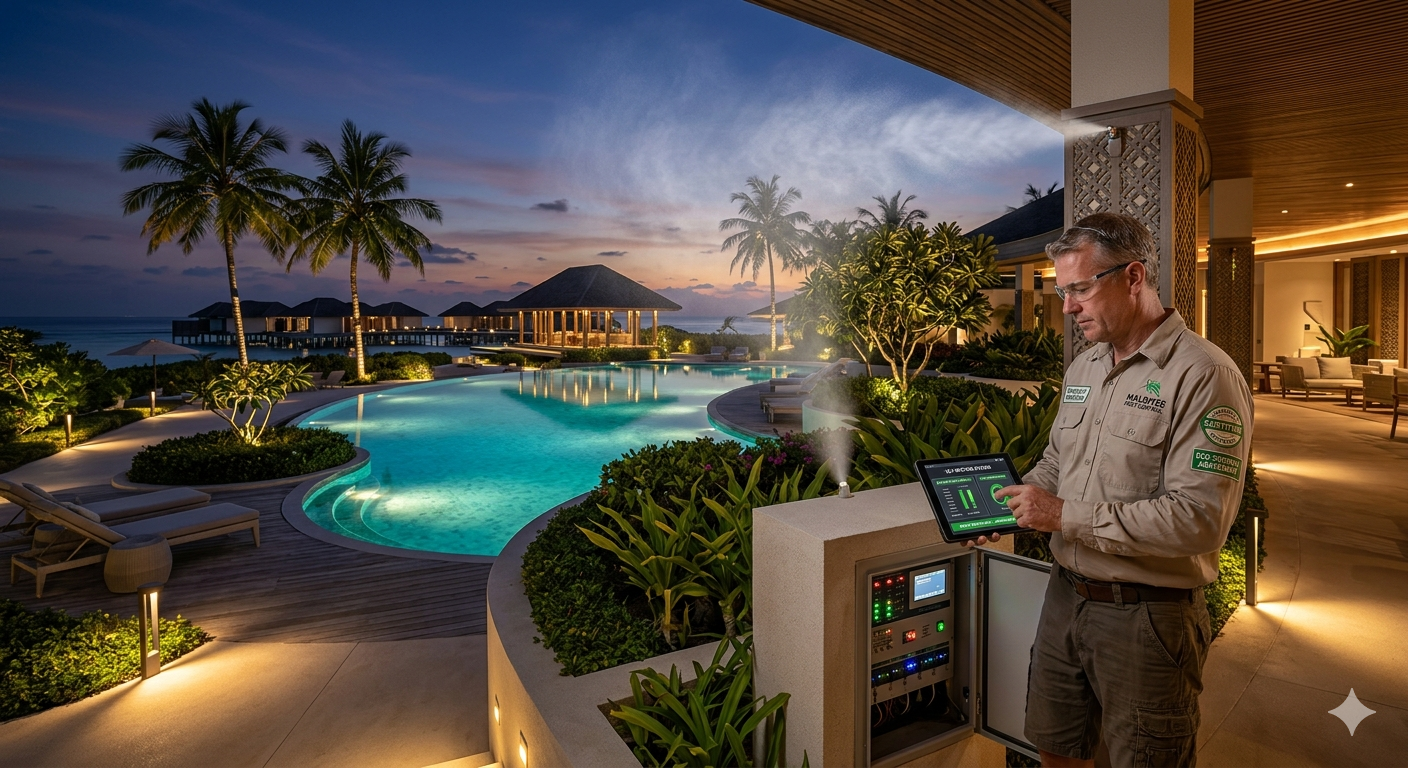
As global temperatures shift, the geographical range of disease-carrying mosquitoes (such as Aedes aegypti and Culex) is expanding. For outdoor hospitality venues, country clubs, and municipal governments, mosquito control is no longer a seasonal luxury—it is a critical public health mandate and a liability management necessity.
The Lifecycle Intervention Approach
Effective mosquito abatement requires a multi-tiered tactical approach that targets the insect at every stage of its lifecycle:
-
Source Reduction: Professional technicians identify and eliminate “micro-habitats” of standing water where larvae thrive.
-
Larviciding: The use of Bti (Bacillus thuringiensis israelensis)—a naturally occurring bacterium—to kill larvae in water sources without harming beneficial insects or local wildlife.
-
Adulticiding: Utilizing automated mosquito misting systems or ULV (Ultra-Low Volume) fogging to reduce the population of biting adults in high-traffic areas.
Liability and Brand Protection
For businesses in the hospitality industry, a “mosquito problem” leads to immediate negative reviews and decreased foot traffic. Furthermore, as legal precedents evolve, property owners may face liability claims if they fail to exercise “reasonable care” in controlling known disease vectors on their premises. Investing in a professional seasonal mosquito management program is a strategic hedge against both biological threats and financial loss.

Dianna Bearden is a homeowner and DIY enthusiast who loves tackling household pests. She shares budget-friendly tips and proven tricks to reclaim your space from bugs.