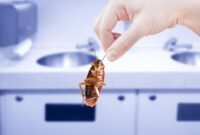

Cockroaches can be difficult to control once they become established inside a home. Seeing one cockroach and removing it may solve the immediate problem, but it does not necessarily address the reason why other cockroaches are present. If food, water, shelter, and entry points remain available, the insects may continue to appear even after several visible cockroaches have been eliminated.
For this reason, effective cockroach control should not depend on a single method. A better approach is to combine sanitation, moisture management, sealing potential entry points, monitoring, and appropriate pest control methods. The goal is not simply to kill the cockroaches that are visible but to reduce the conditions that allow them to survive and reproduce.
Homeowners also need to understand that different situations may require different levels of control. A single cockroach that enters from outside is very different from repeated sightings in several rooms accompanied by droppings and egg cases. The response should therefore be based on the level of activity rather than using the strongest available treatment immediately.
Start by Identifying the Source
Before choosing a control method, it is useful to determine where the cockroaches may be coming from. They may be entering through gaps around doors, windows, pipes, drains, or walls. In other situations, they may already be hiding inside cabinets, behind appliances, or in other protected areas.
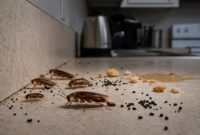
Look for signs such as droppings, egg cases, shed skins, unusual odors, and repeated sightings. The locations where these signs appear can help identify areas that deserve closer inspection.
Without understanding the source, it is easy to treat only the visible insects while leaving the main problem untouched.
Remove Accessible Food
Cockroaches can survive by consuming relatively small amounts of food residue. Crumbs, grease, food scraps, and improperly stored ingredients can provide enough resources to make a home attractive to them.
Kitchen surfaces should be cleaned regularly, especially after food preparation. Spills should be removed promptly, and food should not be left uncovered unnecessarily.
This does not mean the kitchen must be spotless at every moment. The more realistic objective is to reduce accessible food sources and prevent residue from accumulating in hidden areas.
Store Food Properly
Food should be stored in containers that can be closed securely. Open bags and damaged packaging can provide easy access to cockroaches.
Dry foods such as flour, rice, cereal, sugar, and snacks should be protected from pests and moisture.
Pet food should also be considered. If food is left exposed for long periods, it can become another accessible source for cockroaches.
Good storage practices can make pest control more effective because insects have fewer opportunities to feed.
Clean Behind and Under Appliances
Some of the most useful areas to inspect are also the easiest to ignore. Refrigerators, ovens, washing machines, and other large appliances can create dark and relatively undisturbed spaces.
Food particles, grease, dust, and moisture may accumulate underneath or behind them.
Cleaning these areas periodically can reduce food sources and make it easier to identify pest activity. Heavy appliances should only be moved when it can be done safely, particularly if they are connected to electricity or gas.
Remove Standing Water and Fix Leaks
Cockroaches need moisture to survive, so water management is an important part of control.
Check for leaking faucets, damaged pipes, condensation, and water collecting underneath sinks or appliances. Even a small leak can create a consistently damp environment.
Repairing the underlying problem is more effective than repeatedly wiping the area without addressing the source.
At night, keeping sinks reasonably dry can also reduce access to available water.
Reduce Clutter
Cockroaches prefer protected areas where they can remain undisturbed. Clutter can provide additional hiding places and make inspection more difficult.
Cardboard boxes, paper stacks, unused appliances, and piles of household materials should be reduced where possible.
Storage areas do not need to be perfectly organized. They simply need to remain accessible enough for homeowners to inspect and clean them regularly.
Seal Cracks and Gaps
Structural gaps can provide entry points and hiding areas for cockroaches. Common locations include spaces around pipes, doors, windows, cabinets, and wall penetrations.
Sealing unnecessary openings can reduce access and limit movement between different areas of a property.
This measure is particularly useful when cockroaches appear to be entering from outside or from neighboring areas.
Check Door and Window Gaps
Doors and windows should fit properly. Gaps around frames can provide opportunities for insects to enter.
Where appropriate, damaged screens should be repaired and gaps beneath doors should be addressed.
These relatively simple improvements can contribute to long-term pest prevention without relying entirely on chemical treatments.
Use Traps for Monitoring
Monitoring can help homeowners understand where cockroach activity is concentrated. Sticky traps, for example, can provide information about whether cockroaches are active in particular areas.
Traps should be placed in locations where cockroaches are likely to travel, such as along walls, near appliances, or inside cabinets.
The purpose of monitoring is not necessarily to solve a major infestation by itself. Instead, it can help identify activity and evaluate whether control efforts are working.
Consider Cockroach Baits
Baits can be an effective component of cockroach control when used correctly. They are designed to attract cockroaches and expose them to an active ingredient.
However, bait placement and product instructions matter. Baits should be used according to the label, and they should not be placed where children or pets can access them.
Using large quantities does not automatically make a treatment more effective. Proper placement and consistent application are more important than simply using more product.
Do Not Spray Everything With Insecticide
A common reaction to seeing cockroaches is to spray insecticide around the entire room. This may kill visible insects, but it is not necessarily an effective strategy for controlling an established infestation.
Broad, unnecessary spraying can also create unwanted exposure to chemicals and may interfere with other control methods.
In particular, some sprays can discourage cockroaches from approaching bait placements, reducing the effectiveness of a bait-based strategy.
A targeted approach is generally more sensible than treating every surface indiscriminately.
Follow Product Instructions Carefully
If an insecticide or other pest control product is used, the label should be followed exactly.
Important information may include where the product can be applied, how much should be used, how often it can be reapplied, and what precautions are required.
Using a product outside its intended application can create unnecessary risks and may not improve pest control.
Keep Children and Pets Safe
Household pest control should always consider the safety of children and animals.
Pesticides, baits, and other control products should be stored and placed according to their instructions. They should not be left where children or pets can easily reach them.
If a product requires temporary evacuation of a treated area, the manufacturer’s instructions should be followed.
Clean After Pest Activity
Once cockroach activity has been identified or controlled, contaminated or soiled areas should be cleaned appropriately.
Droppings, shed skins, food residue, and other debris should be removed using suitable cleaning practices.
The purpose is not only to improve appearance. Removing residues also makes it easier to monitor whether new signs appear later.
Be Careful With DIY Remedies
The internet contains many home remedies for cockroaches, ranging from household powders to strongly scented substances.
Some may have limited effects under certain circumstances, but they should not automatically be considered reliable alternatives to established pest management methods.
A major problem with many DIY approaches is that they focus on killing visible insects without addressing food, water, shelter, or entry points.
If the infestation is persistent, relying on unverified remedies can simply delay more effective treatment.
Treat the Whole Problem, Not Just One Room
Cockroaches can move through walls, plumbing spaces, cabinets, and other connected areas. Therefore, treating only the room where a cockroach was seen may not be enough.
If signs appear in both the kitchen and bathroom, for example, the surrounding areas should also be inspected.
A broader assessment can help determine whether the problem is isolated or distributed throughout the property.
Pay Attention to Shared Buildings
People living in apartments, condominiums, or other connected buildings may face additional challenges.
Cockroaches can potentially move between units through gaps, plumbing systems, walls, or shared building areas.
In these situations, controlling one unit may not completely solve the problem if a nearby source remains active.
Building management or professional pest control services may need to be involved when the problem appears to extend beyond one household.
Professional Pest Control May Be Necessary
Professional pest control is worth considering when cockroach activity continues despite reasonable sanitation and exclusion measures.
It is particularly relevant when homeowners find cockroaches repeatedly, discover egg cases, see activity in multiple rooms, or notice that the problem is increasing.
A professional can assess the property and identify potential sources that may be difficult for homeowners to locate.
Professional treatment can also be useful when the infestation is extensive or when household members are unable to safely apply pest control products.
Prepare Before a Professional Treatment
If professional pest control is arranged, preparation may improve access to affected areas.
Food should be stored properly, clutter should be reduced, and cabinets or other treatment areas may need to be made accessible depending on the service provider’s instructions.
Homeowners should ask the pest control professional what needs to be moved, cleaned, covered, or removed before treatment.
Following these instructions can make the treatment more practical and reduce unnecessary complications.
Do Not Expect Immediate Results
Cockroach control does not always produce instant results. Depending on the method used, it may take time before activity decreases.
This is especially relevant when bait-based control is used. The objective is not simply to kill every visible insect immediately but to reduce the population over time.
Homeowners should therefore monitor activity and follow the recommended treatment schedule rather than repeatedly applying different products out of frustration.
Monitor After Treatment
Monitoring is an important part of long-term pest management.
Sticky traps or regular visual inspections can help determine whether activity is decreasing. Homeowners should pay attention to new droppings, egg cases, and repeated sightings.
If activity returns, the source should be investigated rather than assuming that another quick spray will solve the problem.
Keep the Kitchen Dry at Night
The kitchen can provide both food and water, making it one of the most important areas for cockroach control.
After evening meals, food residue should be removed, dishes should be washed, and sinks should be kept reasonably dry.
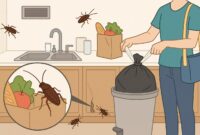
Garbage containing food waste should also be managed appropriately.
These small changes reduce the resources available to cockroaches during the hours when they are often most active.
Maintain Regular Cleaning
Regular cleaning remains useful after an infestation has been controlled.
The focus should be on food preparation areas, floors, cabinets, garbage areas, and other locations where crumbs or residues can accumulate.
However, cleaning should be realistic. There is no need to repeatedly disinfect every surface simply because cockroaches were previously present.
The purpose is to maintain conditions that are less favorable to pest activity.
Repair Problems That Keep Returning
If cockroaches continue to appear in the same location, homeowners should investigate why.
Repeated activity around a sink may indicate a leak. Activity near a door may indicate an entry gap. Cockroaches behind an appliance may indicate food residue or moisture.
Looking for these patterns can help identify the underlying cause instead of treating each sighting as an isolated event.
Prevention After the Infestation Is Controlled
Eliminating the immediate infestation is only one part of pest management. Preventing another infestation requires maintaining the conditions that made the home less attractive to cockroaches.
Food should remain properly stored, leaks should be repaired, garbage should be managed, clutter should be controlled, and structural gaps should be checked periodically.
These habits may seem simple, but their long-term consistency is more important than performing an intensive cleaning session once and then returning to old habits.
A Practical Cockroach Control Plan
For most households, a practical approach can be organized into several stages.
First, identify where cockroaches are being seen and look for signs of activity. Second, remove accessible food and water sources. Third, reduce clutter and seal obvious entry points. Fourth, use appropriate monitoring and control methods according to product instructions. Finally, continue monitoring after treatment.
If the infestation is persistent or widespread, professional pest control should be considered.
This approach is more systematic than simply reacting every time a cockroach appears.
Common Mistakes to Avoid
Several mistakes can make cockroach control less effective. One is relying entirely on sprays while ignoring food and moisture. Another is cleaning visible areas while leaving hidden food residue behind appliances.
Using too many different products at the same time can also create unnecessary chemical exposure and make it difficult to determine which treatment is working.
Finally, stopping all prevention immediately after seeing fewer cockroaches can allow the problem to return.
Conclusion
Getting rid of cockroaches is rarely as simple as eliminating the insects that are visible. A successful approach needs to address the conditions that allow cockroaches to enter, feed, hide, and reproduce inside the home.
Food storage, regular cleaning, moisture control, clutter reduction, sealing gaps, monitoring, and appropriate pest control methods should work together. Chemical products can be useful, but they should be used selectively and according to their instructions rather than applied everywhere without a clear strategy.
Homeowners should also recognize when a problem has become too difficult to manage independently. Repeated sightings, egg cases, activity in multiple rooms, and continued infestation despite preventive measures are reasonable reasons to seek professional assistance.
The long-term objective is not simply to have a few days without seeing a cockroach. It is to make the home less suitable for cockroaches in the first place. When food, water, shelter, and access are consistently controlled, the likelihood of another infestation can be reduced.

Dianna Bearden is a homeowner and DIY enthusiast who loves tackling household pests. She shares budget-friendly tips and proven tricks to reclaim your space from bugs.