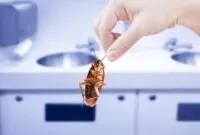

Cockroaches are common household pests that can become difficult to control when they are allowed to establish a population inside a property. Seeing a single cockroach can be unpleasant, but one sighting does not always mean that a serious infestation is present. Cockroaches can occasionally enter a home from outside, through plumbing areas, packages, neighboring properties, or other access points. The situation becomes more concerning when cockroaches or signs of their activity appear repeatedly in different areas of the house.
Identifying an infestation at an early stage is important because cockroaches can reproduce quickly under suitable environmental conditions. A home that provides food, water, warmth, and hiding places may allow a small pest problem to develop into a larger one. Unfortunately, cockroaches are also mostly active at night and can remain hidden during the day, which means that homeowners may not immediately realize how extensive the problem has become.
For this reason, it is useful to understand the signs that can indicate cockroach activity. Direct sightings are only one indication. Droppings, unpleasant odors, egg cases, shed skins, damage to certain materials, and repeated activity in particular areas can provide additional information. By recognizing these signs, homeowners can respond earlier instead of waiting until cockroaches become visible throughout the home.
1. Seeing Cockroaches Repeatedly
The most obvious sign of cockroach activity is seeing live cockroaches. However, the frequency and location of sightings are more informative than seeing one insect by itself.
Finding a cockroach once does not necessarily prove that an infestation exists. It may have entered the house accidentally or come from an external source. On the other hand, seeing cockroaches repeatedly over several days or weeks suggests that there may be an established source nearby.
The location also matters. Repeated sightings in kitchens, bathrooms, utility rooms, or areas around plumbing may indicate that the insects have access to food, water, or shelter.
2. Seeing Cockroaches During the Day
Cockroaches are generally more active at night, which is why daytime sightings can sometimes deserve additional attention.
When a cockroach population becomes larger or their hiding spaces become crowded, some insects may become active outside their usual period. However, daytime activity does not automatically prove that an infestation is severe.
It should instead be considered together with other signs. If daytime sightings occur repeatedly and are accompanied by droppings, egg cases, or multiple live insects, a more established infestation may be present.
3. Cockroach Droppings
Cockroach droppings are another important indication of pest activity. Depending on the species, droppings may appear as small dark specks, smears, or pellet-like material.
They may be found in areas where cockroaches spend time, such as inside cabinets, along walls, behind appliances, or in other dark spaces.
Finding droppings does not necessarily indicate how many cockroaches are present. However, repeated droppings in several locations suggest that the insects have been using those areas regularly.
4. Unusual Odor
A noticeable musty or unpleasant odor can sometimes develop when cockroach activity becomes significant. The odor may be more noticeable in enclosed areas such as cabinets, storage spaces, or rooms with limited ventilation.
This is not a reliable sign by itself because many other household problems can produce unpleasant smells. Moisture, food waste, mold, and plumbing issues can also create odors.
However, if an unusual smell occurs together with other cockroach signs, it can provide additional evidence that pest activity is present.
5. Cockroach Egg Cases
Cockroach egg cases, known as oothecae, are another sign that deserves attention. These structures contain developing eggs and can sometimes be found in protected areas.
They may appear in cracks, cabinets, behind appliances, or other locations that provide shelter.
Finding an ootheca is particularly important because it indicates reproductive activity rather than simply the accidental presence of one adult cockroach.
If egg cases are discovered, the surrounding area should be inspected carefully for additional signs.
6. Shed Skins
Cockroaches grow by passing through several developmental stages. During this process, they shed their outer skins.
These shed skins can remain in areas where cockroaches hide. Finding multiple shed skins may therefore indicate that cockroaches have been using a particular location for an extended period.
They can be difficult to notice because they may be small and blend into dusty or dark areas.
7. Small Dark Marks Around Cabinets
Dark marks or smears around cabinets, walls, corners, and other sheltered areas can sometimes be associated with cockroach activity.
These marks may result from droppings or contact with surfaces. However, not every dark mark is caused by cockroaches.
Homeowners should therefore look for multiple signs rather than assuming that every stain is evidence of an infestation.
8. Cockroaches in the Kitchen
The kitchen is one of the most important areas to inspect because it can provide food, water, warmth, and shelter.
Cockroaches may hide behind refrigerators, under sinks, inside cabinets, beneath appliances, or around other areas where food residue and moisture are available.
Repeated activity in the kitchen should therefore be investigated, particularly when combined with droppings or other evidence.
Keeping the kitchen clean is helpful, but cleanliness alone may not eliminate an established infestation if cockroaches have access to hidden shelters or neighboring sources.
9. Cockroaches Around Plumbing
Bathrooms, kitchens, laundry areas, and utility rooms contain plumbing fixtures that can provide moisture.
If cockroaches are repeatedly found around sinks, pipes, drains, or other damp areas, the source of moisture should be investigated.
Leaks should be repaired, and areas beneath sinks should be inspected periodically. Persistent dampness can make an environment more favorable for pests.
10. Activity Behind Appliances
Large appliances can create dark, warm, and relatively undisturbed spaces. Refrigerators, ovens, washing machines, and other equipment may therefore become hiding areas.
Food crumbs, grease, dust, and moisture can also accumulate underneath or behind these appliances.
If cockroach activity is suspected, these areas should be inspected carefully. Moving heavy appliances should be done safely, particularly when electrical connections or gas lines are involved.
11. Cockroaches Inside Cabinets
Kitchen and bathroom cabinets provide enclosed spaces where cockroaches can remain hidden.
Signs may include droppings, egg cases, shed skins, unusual odors, or live insects.
Cabinets should be kept reasonably organized so that their corners and edges can be inspected. Food should also be stored in closed containers to reduce accessible sources.
12. Cockroaches in Storage Areas
Storage rooms, garages, basements, and utility spaces can sometimes provide ideal hiding conditions. Boxes, paper materials, unused equipment, and clutter can create sheltered spaces.
If these areas are rarely inspected, an infestation may develop without being noticed.
Reducing unnecessary clutter and periodically checking stored items can make it easier to identify pest activity early.
13. Damage to Food Packaging
Cockroaches may interact with food packaging while searching for food. Damaged packages can therefore sometimes be a warning sign.
However, not every damaged package has been caused by cockroaches. Other insects, rodents, moisture, or simple physical damage can produce similar results.
If damaged packaging is accompanied by droppings, live insects, or other evidence, the likelihood of pest activity becomes more significant.
14. Unexplained Food Contamination
Food that has been left uncovered may be exposed to various forms of contamination, including contact with pests.
If food appears contaminated or packaging has been compromised, it should not simply be consumed because it looks normal.
Food storage practices should be reviewed, particularly if cockroach activity is suspected in the kitchen.
15. Activity Near Garbage Areas
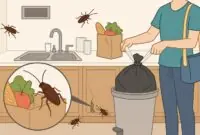
Garbage provides a potential food source for cockroaches, particularly when it contains food scraps.
Repeated cockroach activity around garbage containers can therefore indicate that the insects are using the area as a feeding location.
Waste should be removed regularly, while garbage containers should be cleaned when residues accumulate.
16. Cockroaches Coming From Drains
Some cockroach species can be associated with drains and plumbing environments. If insects repeatedly appear near drains, it is worth investigating the surrounding conditions.
However, homeowners should not immediately assume that the drain itself is the source. Cockroaches may also be entering through nearby cracks, pipes, or other openings.
A broader inspection is more useful than focusing on one suspected entry point.
17. Increasing Number of Sightings
An increase in the frequency of cockroach sightings can be a particularly useful warning sign.
For example, seeing one cockroach every few months is different from seeing several insects every week. A pattern of increasing activity suggests that environmental conditions may be supporting a growing population.
At this point, waiting for the problem to disappear on its own is generally not a good strategy.
18. Cockroaches Appearing in Different Rooms
An isolated sighting in one room may have a relatively limited explanation. Repeated sightings in kitchens, bathrooms, bedrooms, and storage areas can indicate a wider problem.
Cockroaches may move between rooms through gaps, wall spaces, plumbing areas, and other routes.
When activity appears in several parts of the home, homeowners should consider inspecting the property more broadly rather than treating only the room where the insect was seen.
19. Evidence Near Entry Points
Cockroach activity near doors, windows, wall gaps, plumbing penetrations, and other access points can indicate how the insects are entering the home.
External entry points are particularly relevant when sightings are occasional rather than continuous.
Sealing unnecessary gaps can reduce future access, although this may not solve the problem if an established population is already living inside.
20. Why One Sign Is Not Always Enough
Many household problems can produce signs that resemble cockroach activity. Small dark particles may be dirt, food residue, or other insects’ waste. Unpleasant odors may come from moisture or plumbing. Damaged packaging may have several possible causes.
Therefore, homeowners should avoid concluding that an infestation exists based on one uncertain observation.
A combination of signs provides stronger evidence. For example, repeated live sightings combined with droppings and egg cases would be more concerning than a single unexplained mark.
Inspecting the Home at the Right Time
Because cockroaches are often more active at night, inspections performed only during the daytime may miss important activity.
Homeowners who suspect an infestation can pay attention to areas where cockroaches are likely to hide, including dark corners, cabinets, spaces beneath sinks, and areas behind appliances.
However, inspection should be performed safely. Heavy appliances should not be moved without considering electrical, gas, or structural hazards.
Why Early Detection Matters
Early detection can make pest management more manageable. A small problem may be easier to address before cockroaches spread into multiple areas of a property.
Once cockroaches establish themselves in numerous hiding places, identifying every source becomes more difficult.
Early action does not necessarily mean immediately applying large amounts of insecticide. It means identifying the cause, removing food and water sources, improving sanitation, sealing entry points, and determining whether professional pest control is necessary.
What to Do After Finding Signs
If signs of cockroach activity are discovered, the first step should be to inspect the surrounding area.
Look for accessible food, moisture, clutter, cracks, and other conditions that may support the pests. Food should be stored properly, garbage should be managed, and leaks should be repaired.
If activity continues despite these improvements, professional pest control may be appropriate.
When Professional Pest Control Is Necessary
Professional assistance becomes more relevant when cockroach sightings are frequent, multiple areas are affected, egg cases are found, or household prevention measures do not reduce activity.
A professional can inspect potential hiding areas and determine which control methods are appropriate.
This can be more effective than repeatedly treating visible cockroaches without identifying where the population is located.
Avoid Relying Only on Visible Cockroaches
One of the most common mistakes homeowners make is focusing only on the cockroaches they can see.
Killing a visible insect may provide immediate relief, but it does not necessarily affect hidden insects, egg cases, or access points.
An infestation should therefore be treated as an environmental problem rather than simply a collection of individual insects.
Maintaining the Home After Treatment
If professional or household pest control measures are used, prevention should continue afterward.
Food should remain properly stored, moisture problems should be corrected, clutter should be controlled, and potential entry points should be monitored.
Without these changes, cockroaches may return because the conditions that supported the original infestation remain available.
Conclusion
Recognizing the signs of a cockroach infestation is an important part of effective household pest management. Seeing a cockroach once does not automatically mean that an infestation has developed, but repeated sightings and additional evidence deserve closer attention.
Droppings, egg cases, shed skins, unusual odors, damaged food packaging, and repeated activity around kitchens, bathrooms, plumbing, garbage areas, and appliances can all provide useful clues.
The most important point is to look for patterns rather than relying on a single sign. A combination of evidence gives homeowners a better basis for deciding whether further action is necessary.
Early detection also provides an opportunity to address the environmental conditions that allow cockroaches to survive. Food residues, accessible garbage, moisture, clutter, cracks, and other hiding places should be managed as part of the response.
If cockroach activity continues or becomes widespread, professional pest control may be necessary. The goal should not simply be to eliminate the cockroaches that are visible, but to identify and address the conditions that allow the infestation to continue.

Dianna Bearden is a homeowner and DIY enthusiast who loves tackling household pests. She shares budget-friendly tips and proven tricks to reclaim your space from bugs.