
Bed bugs are small insects that can become a difficult household problem because of their ability to hide in narrow spaces and remain unnoticed for relatively long periods. They are commonly associated with beds, mattresses, furniture, and other areas where people spend a significant amount of time resting. However, their presence is not always immediately obvious because bed bugs are small and tend to remain hidden during the day. As a result, many homeowners only realize that there may be a problem after noticing repeated signs around the bedroom. Learning how to identify bed bugs and recognize their early signs can help homeowners respond before the infestation becomes more difficult to manage.
What Are Bed Bugs?
Bed bugs are small, parasitic insects that feed on blood. Adult bed bugs are generally reddish-brown in appearance and have a flattened body, although their appearance can change after feeding. Their small size allows them to hide in cracks, mattress seams, bed frames, furniture joints, and other narrow spaces that are difficult to inspect during normal cleaning.
One reason bed bugs are difficult to manage is that they do not necessarily remain directly on the mattress. They can hide in surrounding furniture, cracks in walls, carpets, electrical outlets, and other areas close to where people sleep. Therefore, inspecting only the top surface of a mattress may not provide enough information to determine whether bed bugs are present. A more complete inspection should consider the entire sleeping area and its surroundings.
Small Dark Spots on Bedding
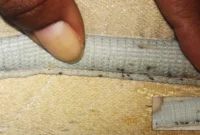
One of the signs that may indicate bed bug activity is the appearance of small dark spots on sheets, pillowcases, mattresses, or nearby furniture. These marks can sometimes be associated with bed bug droppings or other residue left behind by the insects.
However, dark spots on bedding should not automatically be interpreted as proof of bed bugs. Other substances can produce similar marks. The location and pattern of the spots should therefore be considered together with other evidence, such as insects, shed skins, eggs, or additional signs around the bed.
If these marks continue to appear after bedding has been cleaned, the mattress seams and surrounding furniture should be inspected carefully. Repeated signs in the same sleeping area deserve further attention because they may indicate ongoing activity.
Small Reddish Stains
Small reddish stains on bedding can also occur when bed bugs are present. These stains may appear after an insect has been crushed while a person is sleeping or moving in bed. The marks are not always obvious, and they may be confused with other types of stains.
For this reason, reddish marks should be treated as a possible clue rather than definitive evidence. If they appear together with other signs, the possibility of bed bugs becomes more relevant.
Regularly checking bedding can be useful because it allows homeowners to notice changes that might otherwise go unnoticed. This is particularly important when unexplained marks repeatedly appear in the same sleeping area.
Bed Bug Eggs and Eggshells
Bed bug eggs are very small and can be difficult to identify without close inspection. They may be found in protected areas around mattresses, bed frames, furniture joints, and cracks.
Eggs or eggshells can be more significant evidence than an unexplained skin reaction because they indicate that bed bugs may be reproducing in the area. Finding them should encourage a more thorough inspection of nearby locations.
Because the eggs are small, homeowners should inspect seams, corners, cracks, and other areas where insects could remain hidden. A flashlight can help improve visibility during inspection.
Shed Skins
As bed bugs develop, they shed their outer skin. These discarded skins may remain in areas where the insects hide. Finding several shed skins around a bed or piece of furniture can therefore be an indication of bed bug activity.
The skins may be pale and relatively easy to overlook. They can sometimes be found inside mattress seams, around bed frames, or in cracks close to sleeping areas.
Again, a single piece of material is not enough to confirm an infestation. However, shed skins combined with other signs provide stronger evidence that bed bugs may be present.
Unexplained Bites
People often associate bed bugs with bites that appear after sleeping. Some individuals may notice itchy red marks on exposed areas of skin, while others may have little or no visible reaction.
This difference is important because skin reactions vary significantly between individuals. A bite or rash alone cannot reliably confirm the presence of bed bugs. Similar symptoms can result from mosquitoes, fleas, allergies, skin irritation, or other causes.
Therefore, unexplained bites should be considered alongside physical evidence around the sleeping area. Looking for insects, droppings, eggs, or shed skins provides more useful information than relying only on skin reactions.
A Musty or Unusual Odor
In some situations, a noticeable odor may develop when a bed bug infestation becomes established. However, smell is not a reliable method for identifying bed bugs during the early stages.
An unusual odor can have many possible causes, including moisture, mold, dirty fabrics, or other household conditions. If a smell is present together with physical evidence of bed bugs, it may support the overall assessment.
Homeowners should therefore avoid using odor alone as a diagnostic method. Physical inspection remains more useful for determining whether bed bugs are actually present.
Where Should You Look?
The mattress is one of the first places that should be inspected, but it should not be the only location. Bed bugs can hide in mattress seams, underneath the mattress, inside bed frames, behind headboards, and around furniture located near the bed.
Other possible hiding areas include cracks in walls, carpets, curtains, drawers, and upholstered furniture. The closer an object is to a sleeping area, the more relevant it may be during an initial inspection.
A systematic inspection is more useful than randomly searching the room. Homeowners can begin with the bed and gradually move outward to surrounding furniture and structural areas.
How Bed Bugs Enter a Home
Bed bugs can enter a home through various pathways. They may be transported in luggage, used furniture, clothing, bags, or other personal belongings. Unlike some household insects, their presence is not necessarily related to poor cleanliness.
This is an important point because bed bug infestations can occur even in clean and well-maintained homes. A person may unknowingly bring bed bugs home after staying in an infested location or purchasing second-hand furniture.
Understanding this pathway can help homeowners focus on prevention rather than assuming that the infestation was caused by poor household hygiene.
What Should You Do After Finding Signs?
When bed bugs are suspected, the first step should be to avoid spreading the insects to other rooms unnecessarily. Moving furniture or sleeping in another room without a plan may allow the infestation to spread to additional areas.
Bedding and clothing should be handled carefully, and items should not simply be moved around the house. The affected area should be inspected systematically to determine the possible extent of the problem.
If several signs are found or live bed bugs are confirmed, professional pest management may be necessary. Bed bugs can be difficult to eliminate because they can hide in locations that are not immediately accessible.
Why Early Detection Matters
Early detection can make bed bug management more manageable because the infestation may be limited to fewer areas. Once bed bugs spread to multiple rooms, furniture, and personal belongings, the control process can become more complicated.
Regular inspection is particularly useful after traveling, purchasing used furniture, or staying in unfamiliar accommodation. Checking luggage and belongings before bringing them fully into the home can help reduce the possibility of introducing bed bugs.
The goal is not to become excessively concerned about every insect or mark. Instead, homeowners should understand the common signs and respond appropriately when several indicators appear together.
Conclusion
Identifying bed bugs requires more than looking for insects on top of a mattress. These pests can hide in seams, furniture joints, cracks, and other protected areas, making early detection difficult.
Dark spots, reddish stains, eggs, shed skins, and unexplained bites can provide useful clues, although none of these signs should automatically be treated as definitive evidence on its own. A combination of physical evidence and careful inspection provides a more reliable basis for determining whether bed bugs are present.
Early recognition is particularly valuable because established infestations can be more difficult to control. When bed bugs are suspected, homeowners should inspect the sleeping area carefully and avoid unnecessarily moving potentially infested belongings around the house.
If the infestation is confirmed or continues to spread, professional assistance should be considered. A systematic response is generally more effective than repeatedly treating visible insects without addressing the areas where bed bugs are hiding.

Dianna Bearden is a homeowner and DIY enthusiast who loves tackling household pests. She shares budget-friendly tips and proven tricks to reclaim your space from bugs.