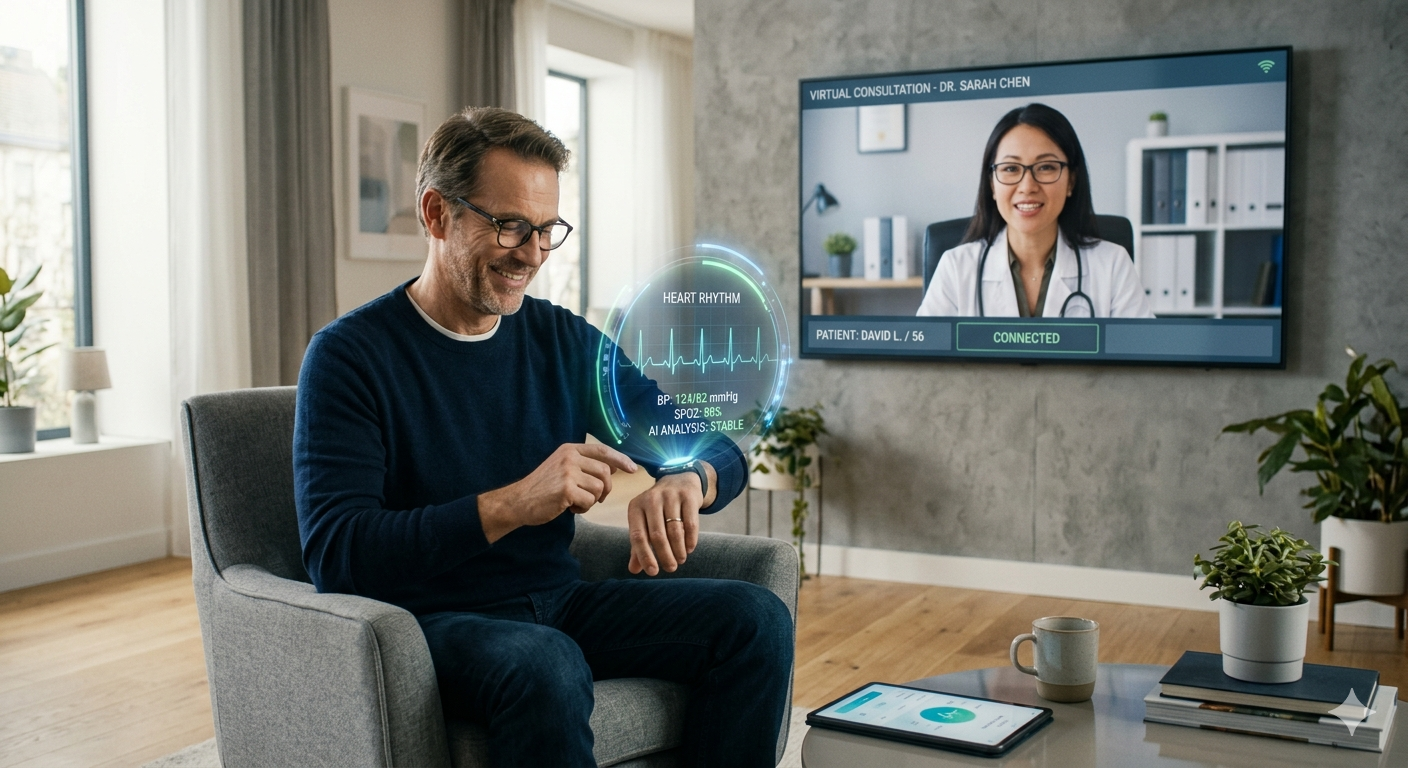
While the pandemic introduced the world to basic video consultations, Telehealth 2.0 is defined by continuous, data-driven care. This shift is creating a massive market for medical device manufacturers and software developers.
The Power of Remote Patient Monitoring (RPM)
RPM uses digital technologies to collect medical and other forms of health data from individuals in one location and electronically transmit that information securely to health care providers in a different location.
-
Wearable Integration: Devices that track glucose levels, blood pressure, and heart rhythm ($ECG$) in real-time.
-
AI Diagnostics: Algorithms that can flag a potential stroke or cardiac event before the patient even feels symptoms.
Why Advertisers Pay a Premium
The CPC for “Remote Patient Monitoring” is exceptionally high because these services offer long-term subscription models (SaaS) to hospitals and private practices. By reducing hospital readmission rates, RPM tools save the healthcare system billions, making the software providers behind them incredibly valuable.
Conclusion
The health industry is pivoting toward high-tech, data-centric solutions. Whether it’s through the lens of genetics, regeneration, or remote digital care, these topics attract high-value stakeholders, making them the most profitable niches for digital publishers today.

Dianna Bearden is a homeowner and DIY enthusiast who loves tackling household pests. She shares budget-friendly tips and proven tricks to reclaim your space from bugs.