
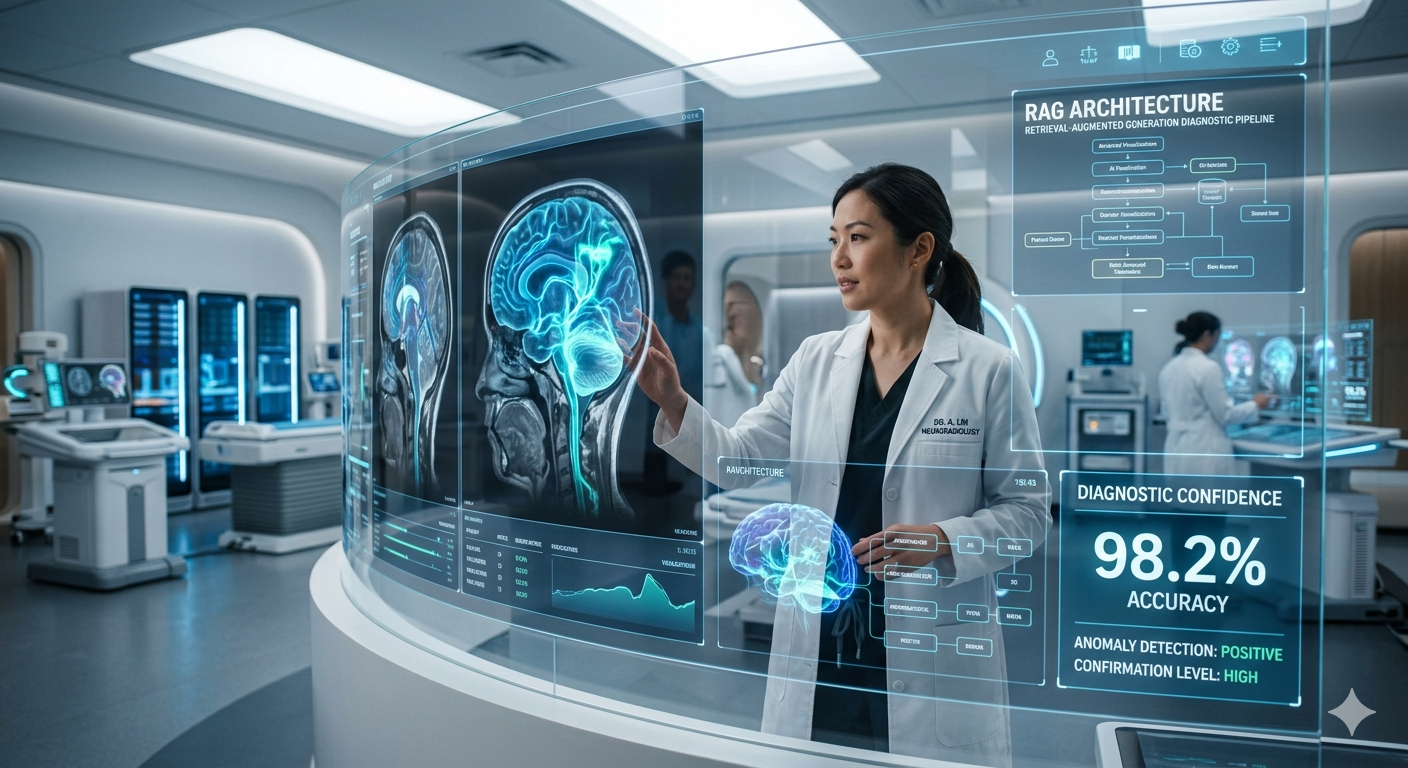
The integration of Artificial Intelligence (AI) into medical diagnostics has moved past the experimental phase and is now a cornerstone of modern healthcare infrastructure. For medical providers and tech investors, this shift represents one of the most lucrative segments of the “Medic Industry,” with high demand for software that reduces human error and accelerates patient intake.
The Shift to Agentic AI and RAG Architectures
In 2026, we are seeing the rise of Retrieval-Augmented Generation (RAG) within clinical decision support systems. Unlike early AI models that occasionally suffered from “hallucinations,” RAG-based systems ground their outputs in verified medical literature and real-time patient data.
-
Radiology & Imaging: AI algorithms can now detect anomalies in X-rays, MRIs, and CT scans with an accuracy rate exceeding 98%, often spotting early-stage malignancies that are invisible to the naked eye.
-
Ambient Clinical Intelligence: Tools like Microsoft Nuance DAX are saving clinicians up to 3 hours per day by automatically converting patient-doctor conversations into structured clinical notes.
From a marketing perspective, keywords related to “AI Diagnostic Software,” “Automated Clinical Coding,” and “AI Medical Imaging ROI” command premium CPC rates. Hospitals are increasingly looking for solutions that offer a clear Return on Investment (ROI). By automating administrative burdens, healthcare facilities can save an estimated $900 billion globally by 2050, making the current market highly competitive for B2B SaaS providers.

Dianna Bearden is a homeowner and DIY enthusiast who loves tackling household pests. She shares budget-friendly tips and proven tricks to reclaim your space from bugs.