
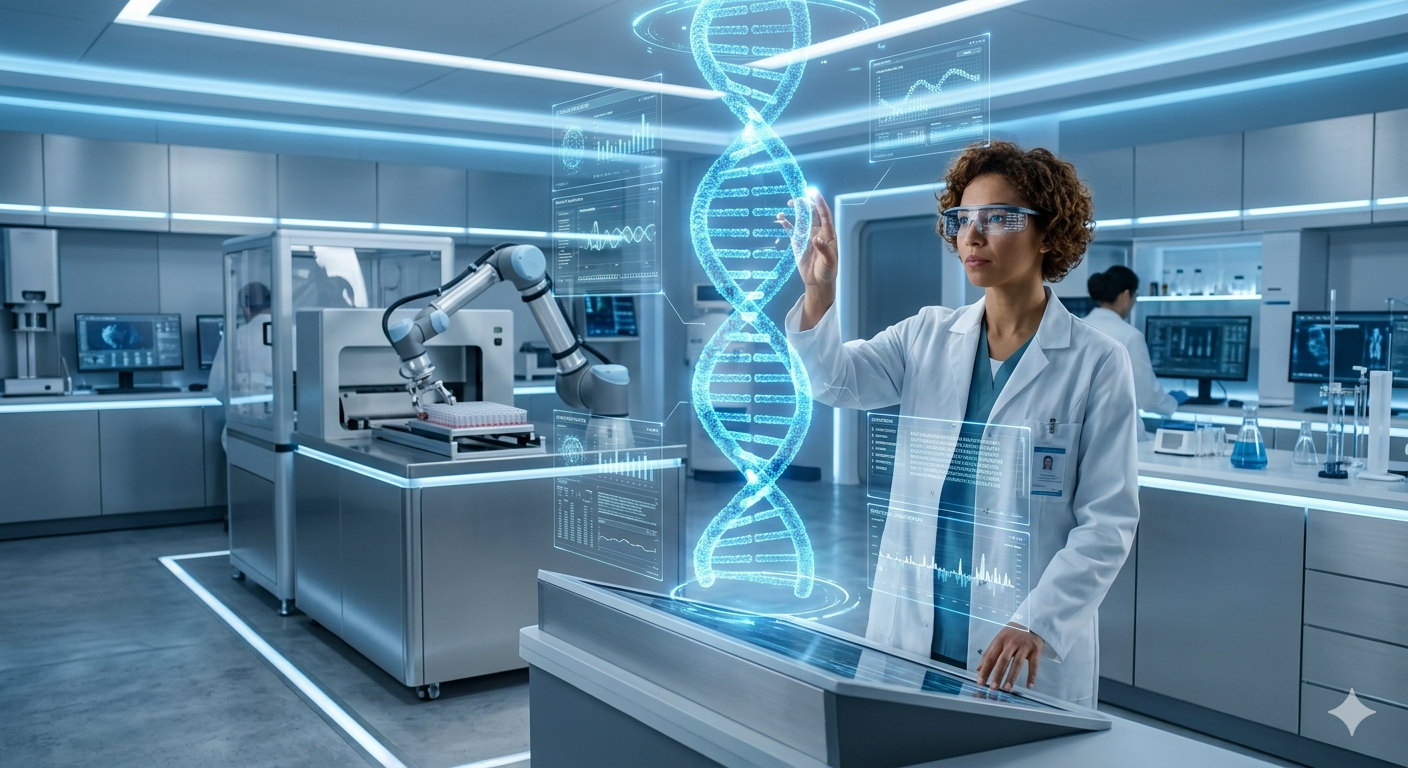
The “one-size-fits-all” era of medicine is rapidly coming to a close. As we move deeper into 2026, Artificial Intelligence (AI) and Machine Learning (ML) are spearheading a transition toward Precision Medicine. This modern healthcare approach accounts for individual variability in genes, environment, and lifestyle for each person.
The Role of Big Data and Genomics
Modern health technology now allows us to sequence a human genome in hours rather than weeks. AI algorithms analyze these massive datasets to identify specific genetic markers that indicate a predisposition to certain diseases. By integrating pharmacogenomics, doctors can now prescribe medications that are genetically compatible with a patient, eliminating the dangerous “trial and error” phase of treatment.
AI-Driven Early Diagnostics
Early detection remains the holy grail of oncology and neurology. New AI-powered imaging tools are now capable of spotting malignant cells or neurological decay years before traditional methods.
-
Liquid Biopsies: AI analyzes blood samples for circulating tumor DNA (ctDNA).
-
Predictive Analytics: Hospitals use real-time data to predict patient deterioration or sepsis before symptoms manifest.
Investment and Future Outlook
For stakeholders, the intersection of HealthTech and SaaS (Software as a Service) represents a massive growth sector. As regulatory bodies like the FDA streamline approvals for AI medical devices, the commercial value of precision diagnostics continues to skyrocket.

Dianna Bearden is a homeowner and DIY enthusiast who loves tackling household pests. She shares budget-friendly tips and proven tricks to reclaim your space from bugs.