When Pests Get Large
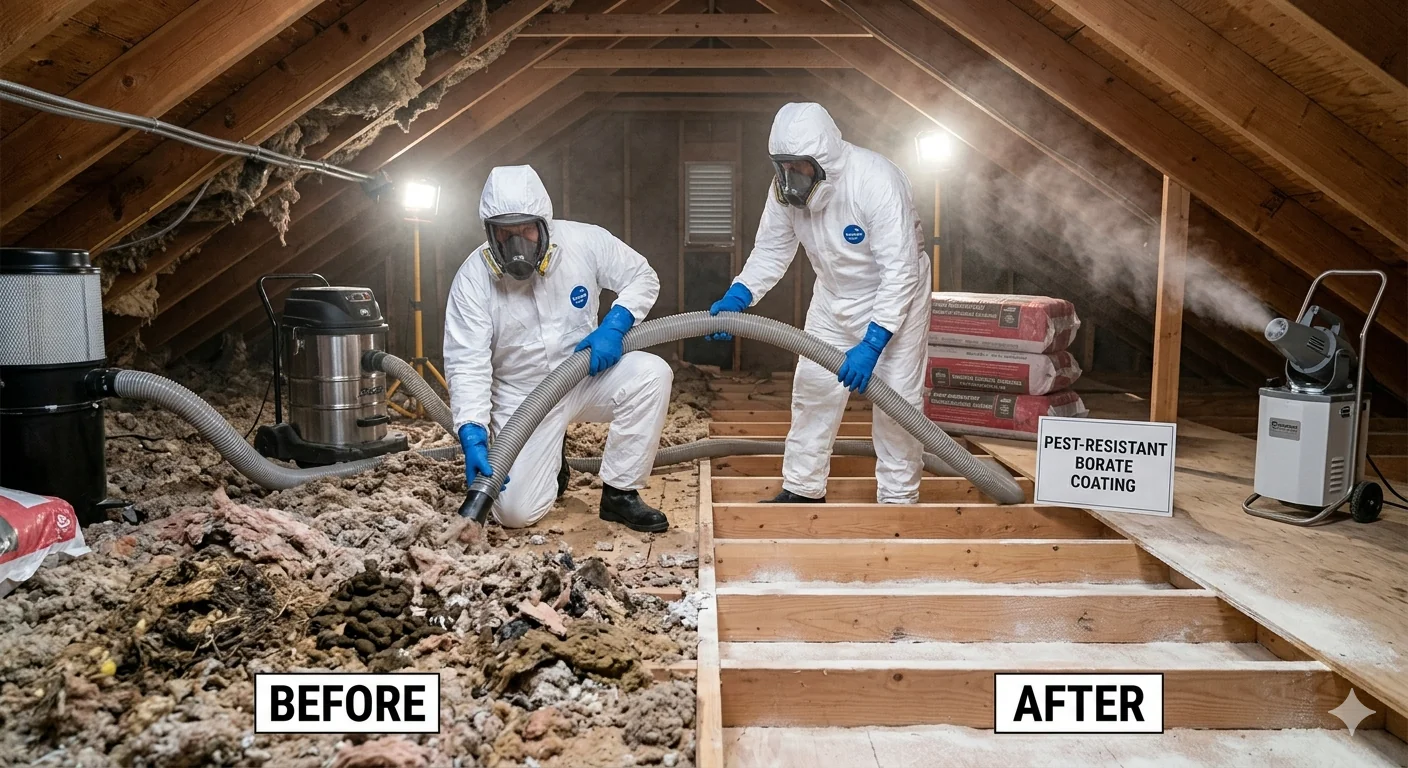
When squirrels, raccoons, or bats move into an attic or crawlspace, the damage is structural and immediate. Unlike insects, wildlife can tear through shingles, destroy HVAC ductwork, and leave behind large amounts of biohazardous waste (guano and droppings).
The Risks of DIY Wildlife Handling
Attempting to trap a mother raccoon or a colony of bats without professional training is dangerous.
-
Disease: Wildlife carry rabies, distemper, and parasites like roundworm.
-
Legal Restrictions: Many regions have strict laws regarding the relocation of “nuisance wildlife.”
-
The “Re-Entry” Problem: Simply trapping an animal is useless if the entry point isn’t professionally reinforced.
The Professional “Exclusion” Process
High-value wildlife services focus on Exclusion. This involves:
-
One-Way Doors: Allowing the animals to leave the home but preventing them from re-entering.
-
Structural Fortification: Using heavy-gauge steel screening and roof-specific sealants that rodents and raccoons cannot chew through.
-
Biohazard Cleanup: Professional decontamination of the attic to remove pheromone trails that attract other animals.
Dianna Bearden is a homeowner and DIY enthusiast who loves tackling household pests. She shares budget-friendly tips and proven tricks to reclaim your space from bugs.