In the luxury real estate market, the structural integrity of a property is its most significant value driver. However, certain pests—specifically drywood termites and powderpost beetles—operate deep within the structural timbers, making localized “spot treatments” ineffective. For high-value assets, whole-structure fumigation is often the only viable path to ensuring a pest-free certification during a property transfer.
The Fumigation Process: A Technical Overview
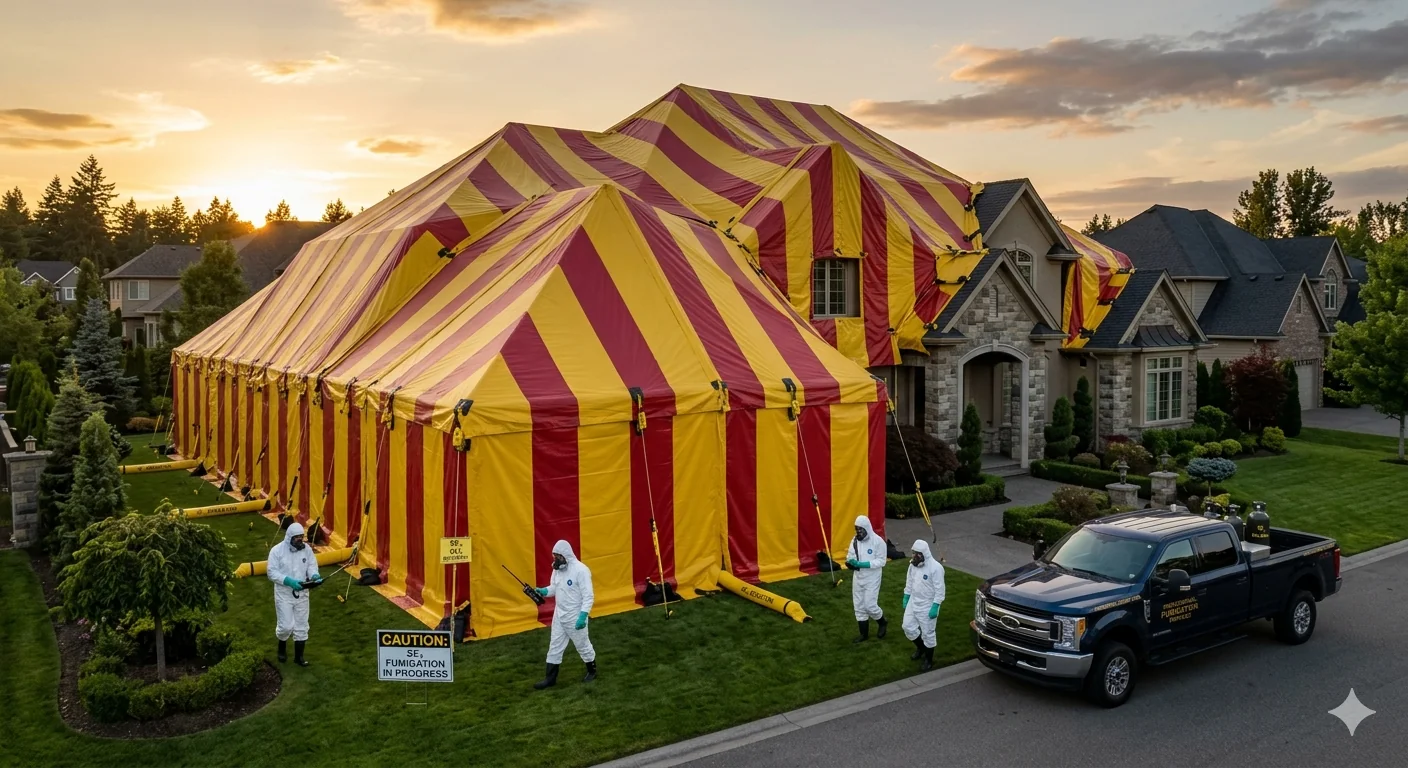
Structural fumigation involves sealing a building in a gas-tight “tent” and introducing a gaseous pesticide, typically sulfuryl fluoride. Unlike liquid treatments, gas penetrates the very grain of the wood, reaching galleries and nests that are otherwise inaccessible.
-
Preparation Phase: Homeowners must remove perishables, medications, and pets.
-
Exposure Period: The gas is maintained at a specific concentration for 24 to 72 hours, depending on the target pest and weather conditions.
-
Aeration: Using high-capacity fans, professionals clear the gas until specialized sensors confirm the air quality is safe for re-entry.
Financial Implications for Homeowners
While the upfront cost of fumigation can range from $2,000 to $8,000+ depending on the cubic footage, the Return on Investment (ROI) is substantial. Properties with a “Clean Wood-Destroying Organism (WDO) Report” close faster and at higher price points. In many jurisdictions, lenders require this clearance before approving a mortgage, making professional fumigation a critical financial tool rather than just a maintenance task.

Dianna Bearden is a homeowner and DIY enthusiast who loves tackling household pests. She shares budget-friendly tips and proven tricks to reclaim your space from bugs.